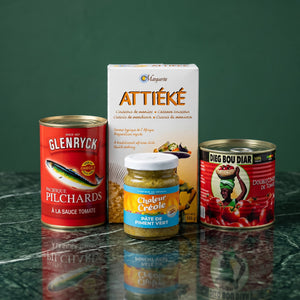








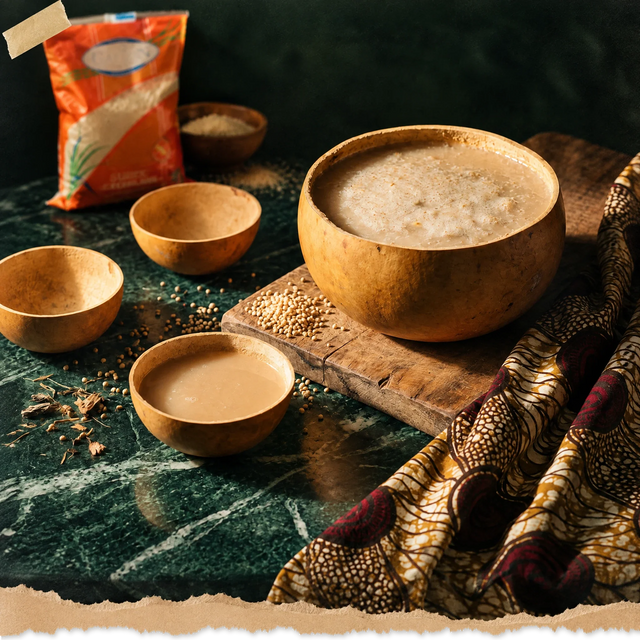


MARGUERITE dried attiéké is a fermented cassava semolina, made in Côte d'Ivoire and dehydrated so that it keeps. 100% cassava. It is rehydrated with warm water in less than 10 minutes, to make the side dish of fish attiéké and garba. 250 g box, for 2 to 3 people.
What is attiéké?
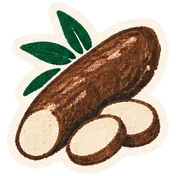
Attiéké is the cassava couscous of the lagoon peoples of southern Côte d'Ivoire, the Ébrié, the Adioukrou and the Avikam, who have been making it for generations. The cassava is grated, fermented for one to two days, pressed, granulated and then steamed: hence its light grains and its hint of acidity, which sets it apart from wheat couscous. The know-how linked to making it has been inscribed on the UNESCO list of Intangible Cultural Heritage since December 2024. It is also spelled attieke or atchéké: it is the same product.
Dried, fresh or frozen attiéké: what are the differences?
Fresh or frozen attiéké is moist and ready to reheat by steaming, but it must be kept cold at all times, which makes it harder to transport. Dried attiéké is the same semolina, dehydrated after cooking: it keeps for several months in the cupboard and rehydrates in a few minutes. It is the most practical form to ship in France, and the one NKOSI offers, with the MARGUERITE brand, made in Côte d'Ivoire from cassava only.
How do you prepare dried attiéké?
- Pour the 250 g of attiéké into a mixing bowl.
- Add 20 cl of warm water, certainly not boiling, and mix with your fingertips or a fork.
- Cover and leave to swell for 5 to 8 minutes.
- Add a drizzle of oil or a knob of butter, then warm for 3 to 4 minutes over a low heat, separating the grains, or steam for a few minutes for lighter grains.
Too much water at once makes the grains sticky: it is better to add a little more if needed. For larger quantities, allow about 80 cl of warm water per kilo of dried attiéké.
What does attiéké taste like?
Light grains, a texture close to fine semolina and a hint of acidity from fermentation, with no bitterness. Its taste stays mild: it takes on the taste of the oil, braised fish, onion, tomato and chilli served with it. That is what makes it the everyday side dish in Côte d'Ivoire.
Fish attiéké, garba, braised chicken: how to serve it?
As fish attiéké, with braised or grilled fish, thinly sliced raw onion and tomato, and chilli: the step-by-step recipe for attiéké with fish is on the blog. As garba, the street dish of Abidjan, with fried tuna, fresh chilli and onion. It also goes very well with braised chicken and alloco. Abodjama refers to a quality of attiéké with large round grains, kept for special occasions: it is not a brand, it is a way of preparing the same product. Everything you need is in our fish attiéké kit and in the Ivorian cuisine section.
Attiéké, gari, foufou, placali: what are the differences?
All of them come from cassava, but not from the same processing. Attiéké is a semolina that is fermented and then steamed. Gari is a grated semolina, fermented and then toasted: granular, crunchy and tangy, it is made into eba in boiling water or rehydrated with cold water. Foufou is a smooth, elastic dough, obtained by stirring cassava flour into boiling water. Ivorian placali, made from fermented cassava worked with a wooden spoon, stays stickier and tangier. And attiéké is not a couscous: couscous is made from wheat.
Why is cassava always eaten processed?
Raw cassava root contains compounds that grating, soaking, fermenting, drying and cooking reduce to safe levels. That is why cassava, sweet or bitter, is never eaten raw, and why European regulations set maximum levels for the root and the flour. Dried attiéké has already gone through all these steps in Côte d'Ivoire: you only need to rehydrate it and reheat it following the instructions.
How long does dried attiéké keep?
Several months at room temperature, in a dry place away from light, in its closed packaging, until the date shown on the box. Once rehydrated, it keeps for only a few hours: prepare the amount needed for the meal. A 250 g box serves 2 to 3 people; for a large table or to stock up, it comes in a pack of 3, 6 or 12 boxes.
Product information
- Brand: MARGUERITE (Racines group, Montpellier)
- Contents: 250 g box
- Ingredient: 100% cassava
- Allergens: none of the 14 regulated allergens, by nature
- Origin: Côte d'Ivoire
- Storage: in a dry place, away from light
- Average nutritional values per 100 g of dry product: energy 1,646 kJ (387 kcal), fat 0.9 g of which saturates 0.3 g, carbohydrate 92 g of which sugars 0.5 g, fibre 4.2 g, protein 0.9 g, salt 0.01 g