





Plantain is a staple food across much of Africa, the Caribbean and Southeast Asia. Unlike the dessert banana, it is always eaten cooked, never raw: fried as aloko, pounded as foutou, boiled or turned into chips. This guide explains what sets it apart from the dessert banana, how to choose its ripeness for a given recipe, its signature preparations and where to find its derivatives in France.
What Is Plantain?
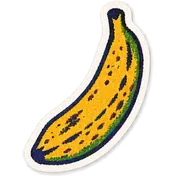
Plantain belongs to the genus Musa, like the dessert banana, but it is a hybrid of the AAB genomic group (around two thirds Musa acuminata, one third Musa balbisiana), classified under the name Musa × paradisiaca. Denser in starch and less sweet than the AAA-group dessert banana, it is always eaten cooked, never raw.
Its ripeness, visible from the color of the skin, determines its culinary use:
- Green plantain: hard, green skin, firm and lightly sweet flesh; for foutou, boiled plantain and chips.
- Yellow plantain: mottled yellow skin, more tender flesh; the classic stage for fried aloko.
- Black plantain: almost black skin, melting and sweet flesh; for the sweetest preparations and fritters.
Where Does Plantain Come From?
The genus Musa originates from Southeast Asia and Oceania. Plantain trees spread to Africa from the first millennium onward, with archaeological traces identified in Cameroon, then to the Caribbean, Central America and part of South America, where they became a staple food. Africa remains today the world's leading plantain-producing region: Cameroon, Nigeria, Rwanda, Tanzania, Uganda and the Democratic Republic of the Congo are among the main producing countries, while Côte d'Ivoire, Ghana and Cameroon account for most of the banana exports from West and Central Africa.
How to Cook Plantain Depending on Its Ripeness?
Once the right stage is chosen, cooking is simple.
- Frying an aloko: peel ripe plantains, cut into rounds or diagonal slices about one centimeter thick, fry in hot oil, around 170 degrees, a few minutes on each side until amber-colored, then drain.
- Boiling: peel and cut green plantain into large chunks, cook in salted water for around fifteen minutes until the flesh is fork-tender.
- Baking: arrange the slices on a baking tray, drizzle with oil, about twenty minutes at 200 degrees, turning halfway through.
Aloko, Foutou, Tostones: Signature Preparations
Aloko, or Alloco, Fried in Côte d'Ivoire
Aloko is a signature street food of Côte d'Ivoire: slices of well-ripened plantain, fried and served with a spicy tomato sauce, onions and sometimes an egg or fish. It is found throughout the country, from the maquis of Abidjan to street stalls. Garba pairs aloko with attiéké and fried tuna.
Foutou Banane, Pounded
Foutou banane is a paste obtained by pounding green plantain in a mortar, often together with cassava, until smooth and elastic, with no added salt or fat. Shaped into balls, it is eaten by hand, dipped into a separately simmered sauce, such as palm nut sauce or peanut sauce.
In the Caribbean and Latin America
In the French Antilles and in Haiti, plantain is served fried or mashed, often as a side to fish or a stew. In the Spanish-speaking Caribbean and Latin America, it takes the form of tostones or patacones, flattened slices fried twice, or Puerto Rican mofongo, a garlic-mashed puree. In Nigeria and Ghana, fried plantain is called dodo; in East Africa, it is eaten boiled and mashed under the name matoke.
Nutritional Composition of Raw and Cooked Plantain
Per 100 g, the Ciqual table from Anses gives the following values.
| Nutrient (per 100 g) | Raw plantain | Cooked plantain |
|---|---|---|
| Energy | 127 kcal | 120 kcal |
| Carbohydrates | 29.6 g | 28.9 g of which sugars 14 g |
| Fiber | 2.3 g | 2.3 g |
| Protein | 1.3 g | 0.8 g |
| Potassium | 499 mg | 465 mg |
| Vitamin C | 18.4 mg | 10.9 mg |
Once turned into fried chips, the composition changes significantly because of the frying oil: depending on the recipe and seasoning, our plantain chips show between 490 and 530 kcal and 20 to 29 g of fat per 100 g, compared with less than 1 g for the raw or boiled fruit.
Recipes with Plantain
- Ivorian Alloco: the recipe for fried plantain with spicy tomato sauce.
- Green Plantain Foutou: the Ivorian pounded paste, green plantain and cassava.
- Plantain Fritters: the sweet version from West Africa and the Antilles.
Where to Find Plantain and Its Derivatives in France?
NKOSI, an African and Caribbean grocery store, does not sell fresh plantain, which is reserved for fresh fruit and vegetable retailers, but offers several plantain chips, cooked and ready to eat:
- Salted Plantain Chips NUMBER ONE, a plain snack made from fried green plantain, 85 g bag.
- Garlic Plantain Chips NUMBER ONE, a garlic-spiced variant, 85 g bag.
- BBQ Plantain Chips NUMBER ONE, smoky flavor, 85 g bag.
- Ripe Plantain Chips NUMBER ONE, made from yellow plantain, 85 g bag.
- Sweet Spicy Plantain Chips NUMBER ONE, ripe plantain with a touch of chili, 85 g bag.
- Plantain and Apple Chips NUMBER ONE, an original sweet pairing, 85 g bag.
The whole range is gathered in the Plantain collection, shipped from the Paris area within 24 to 72 working hours, to mainland France (2 to 3 working days) and to ten European countries. The minimum order is 39 €: in France, delivery to a pickup point is then free, and home delivery is free from 69 €.