

![Cola Nuts from the brand [Brand Name]: 250g/500g/1kg.](http://www.nkosiagro.com/cdn/shop/files/cola-rouge-nkosi-agro.webp?v=1774103054&width=600)
![Cola Nuts, [Brand Name]. Red and beige colas on a marbled green background.](http://www.nkosiagro.com/cdn/shop/files/cola-rouge-vue-2-nkosi-agro.webp?v=1774103058&width=600)


![Cola Nuts from the brand [Brand Name]: 250g/500g/1kg.](http://www.nkosiagro.com/cdn/shop/files/cola-rouge-nkosi-agro.webp?v=1774103054&width=1200)
The kola nut, also called African cola or kola, is the seed of the kola tree, a West African tree. It is chewed raw, in wedges, for its bitterness, and offered as a sign of welcome. Whole nuts, red and white mixed, in a 250 g, 500 g or 1 kg pouch.
What is the kola nut?
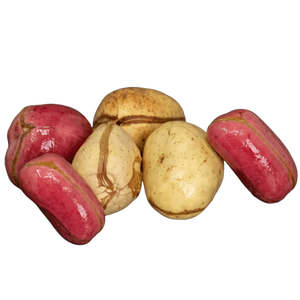
The kola nut is the seed of the kola tree, Cola nitida or Cola acuminata, a tree of the Malvaceae family that grows in West Africa. It is a firm seed, the size of a large chestnut, red, pink or creamy white depending on the tree, which splits into wedges along its natural cleft. It naturally contains caffeine, around 2 to 3% of its weight, like coffee or tea. It is called goro in Hausa and oji in Igbo.
It gave its name to cola soft drinks, of which it was originally an ingredient, at the end of the 19th century. Kola Champion SOLO, a West Indian soda with kola nut extracts, keeps its name and part of its taste.
Kola nut or petit cola: not to be confused
Petit cola, or bitacola, is a different seed: it comes from Garcinia kola, another tree, from another botanical family. Smaller, more bitter and astringent, it does not split into wedges, and its caffeine content has not been established. Both are chewed, shared and offered, hence the frequent confusion, but the kola nut is the larger of the two and the only one whose caffeine content is established.
A nut to offer
In West Africa, presenting kola to a guest is a gesture of respect. Among the Igbo of Nigeria, the Iwa Oji ceremony, the sharing of the nut, opens important gatherings. Among the Hausa, goro is offered at weddings and naming ceremonies. In Guinea, among the Malinké, a red nut and a white nut placed together represent the bride and groom.
How is the kola nut eaten?
Open the nut along its natural cleft, break off a wedge and chew it slowly: the initial bitterness gradually softens and leaves a slightly sweet note. It is chewed in small wedges, during a visit or a ceremony, never in large quantities. The 250 g pouch is enough to discover it, the 1 kg pouch suits ceremonies and large gatherings.
Red kola or white kola: what is the difference?
They are nuts from the same tree: the colour varies from one nut to another, from creamy white to red, and the taste is similar. The difference is mainly symbolic: depending on the region, one or the other is more commonly offered, and some wedding ceremonies bring together a red nut and a white nut. Our pouches mix both.
Storage and precautions
The nuts are sold whole and undried. Keep them in a cool place, away from the sun, wrapped in paper or a clean cloth so that they do not dry out, and remove any damaged nut straight away: a spoiled nut quickly contaminates its neighbours. The kola nut contains caffeine: like coffee, it is not recommended for children or for pregnant or breastfeeding women, and it is best avoided in the evening.
Also to chew
Browse the whole kola nut and petit cola section: petit cola (bitacola) as whole seeds, NUMBER ONE petit cola powder for cooking and Toffi petit cola caramels. For the identity of the two seeds and the known precautions, read our article on petit cola and the kola nut.
Product information
- Product: whole kola nuts, red and white mixed, unbranded
- Contents: 250 g, 500 g or 1 kg pouch, as you choose
- Ingredient: kola nuts, nothing added
- Allergens: none of the 14 regulated allergens, by nature (the kola nut is not one of the tree nuts covered by European regulations)
- Storage: in a cool place, protected from the sun and from drying out