




Petit cola, called bitacola in Cameroon and bitter kola in English, is the bitter seed of Garcinia kola, a tree from the forests of West and Central Africa. People chew it, offer it and share it. It is also credited with many virtues, and “petit cola benefits” or “the dangers of petit cola” are among the most frequent searches about it. This article brings together what is really known: the identity of the seed, its composition, what studies and food authorities say, and the precautions for use. For the product itself, its pack sizes, storage and how to eat it, see the product page for whole petit cola seeds.
In brief. Petit cola (bitacola) is the seed of Garcinia kola, different from the kola nut. No European food authority has published a warning about it, and no study consulted demonstrates an effect in humans: it is first and foremost a seed that people share. NKOSI sells it as whole seeds (250 g, 500 g or 1 kg) and as a powder for cooking, alongside the kola nut.
What is petit cola?
Petit cola is the seed of Garcinia kola Heckel, a tree of the Clusiaceae family (Guttiferae) that grows in the forests of West and Central Africa, particularly in Nigeria and Cameroon. It is an oval, light brown seed, covered with a thin skin that you remove before biting into it. Its taste is very bitter, with a hint of astringency that softens as you chew it. It goes by several names depending on the region and the language: bitacola in French, bitter kola in English, orogbo in Yoruba, aki ilu in Igbo and namijin goro in Hausa.
Above all, a social custom
In West and Central Africa, offering petit cola is a gesture of welcome and respect: it is shared with a guest, it opens a discussion or accompanies an agreement reached between two families. This social and cultural custom, passed down from generation to generation, is what defines petit cola first, even before its composition.
Petit cola and kola nut: what is the difference?
The two seeds share a similar name and a comparable social use, people offer them and chew them, but they do not have the same botanical identity.
| Criterion | Petit cola (bitacola) | Kola nut |
|---|---|---|
| Scientific name | Garcinia kola | Cola nitida or Cola acuminata |
| Botanical family | Clusiaceae (Guttiferae) | Malvaceae |
| Appearance | Small oval seed, light brown | Large red, pink or creamy white seed, in segments |
| Taste | Very bitter and astringent | Bitter, then slightly sweet |
| Caffeine | Content not established in the publications consulted | About 2 to 3% of dry weight |
It was the kola nut, not petit cola, that was long used to flavour the first cola sodas, in the late 19th century. Kola Champion, a West Indian soda made with kola nut extracts, keeps the name and part of the taste. The kola nut naturally contains caffeine, like coffee or tea: the European Food Safety Authority (EFSA) puts the caffeine intake that presents no identified risk for adults, from all dietary sources combined, at 400 mg per day.
Petit cola composition: what is known
As far as we know, there is no official composition table for petit cola, such as those of Anses or the USDA. The available scientific studies describe a fresh seed made up largely of water, with carbohydrates, a smaller share of protein and fat, tannins and phenolic compounds specific to the species, including kolaviron and kolaflavanone. Unlike the kola nut, no reliable scientific publication consulted for this article reports any caffeine content for petit cola.
The benefits of petit cola: what do the studies say?
The lists of “ten benefits of petit cola” that you read online come from oral tradition and from work describing the composition of the seed or trials not carried out in humans. No study consulted demonstrates an effect in humans to date. The claims circulating about blood sugar, sexuality or the kidneys, which are much searched for, are not based on any clinical trial that we have been able to find. What is known for certain fits in one sentence: in West Africa, the seed is shared and chewed as a sign of welcome; it is a social and cultural use, not a demonstrated property.
The dangers of petit cola: are there any official warnings?
Neither Anses, nor EFSA, nor the European Commission has published a warning specific to petit cola as of the date of this article (September 2026). As with any seed eaten whole, check its condition before eating it (smell, mould) and refer to the label on the product you receive for allergens. Petit cola is not one of the tree nuts covered by the European regulation on allergens. Nor are there any official data on its consumption during pregnancy: in the absence of data, the usual caution applies. For any question about your personal situation, a healthcare professional remains the right person to ask.
How do you eat, choose and store petit cola?
The most common way is to bite into the raw seed: you remove the thin brown skin, cut off a piece and chew it slowly. Some prefer to grate it and steep it in hot water. In cooking, petit cola is mainly used as a powder, in very small quantities, in certain slow-cooked sauces and in meat, fish or leafy vegetable dishes from West and Central Africa, particularly in Côte d'Ivoire, Cameroon and Nigeria. Its bitterness is powerful: it is best to start with half a teaspoon and taste before adding more. A good-quality seed is firm, with no mould or suspicious smell; store the seeds in a dry place, at room temperature, in a paper or fabric container rather than sealed plastic, and remove any that deteriorate. The details are on the petit cola product page.
Recipes from the same cuisine
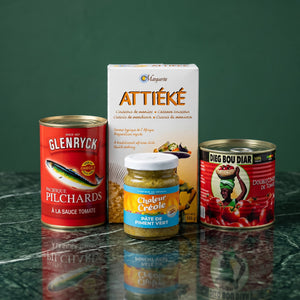
Petit cola is not used as an ingredient in precise quantities: you chew it as it is, or add a pinch of the powder to certain slow-cooked sauces. These recipes belong to the same West and Central African cuisine: ndolé, the Cameroonian national dish with bitter leaves, shrimp and peanuts; chicken kedjenou, an Ivorian recipe of chicken slow-cooked in a sealed pot; attiéké with fish, fermented cassava semolina served with fish.
Where can you buy petit cola in France?
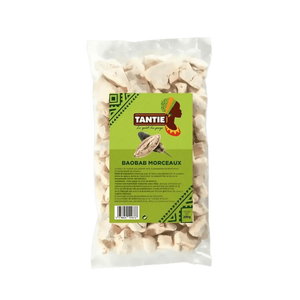
NKOSI is a grocery store specialising in dry and ambient products from Africa and the Caribbean. Whole petit cola seeds are sold in 250 g, 500 g or 1 kg bags, NUMBER ONE petit cola powder is for cooking, and whole kola nuts, red and white, are sold in 250 g, 500 g or 1 kg bags. All three are in the kola nut and petit cola section, shipped from the Paris area within 24 to 72 working hours, with free pickup point delivery in France on orders from 39 €.
Frequently asked questions about petit cola
Does petit cola pose any dangers?
Neither Anses, nor EFSA, nor the European Commission has published a warning specific to petit cola as of the date of this article (September 2026). As with any seed eaten whole, check its condition before eating it (smell, mould) and refer to the label on the product you receive for allergens. For any question about your personal situation, a healthcare professional remains the right person to ask.
What are the benefits of petit cola?
The available scientific studies describe the composition of petit cola, but none demonstrates an effect in humans to date. Traditionally, in West Africa, the seed is shared and chewed as a sign of welcome: this is a social and cultural use, not a demonstrated property.
What is the difference between petit cola and kola nut?
They are two different seeds, each from a distinct tree: petit cola comes from Garcinia kola, the kola nut from the kola tree (Cola nitida or Cola acuminata). Petit cola is smaller and more bitter, and its caffeine content has not been established. The kola nut, which is larger, naturally contains caffeine.
How do you eat petit cola?
You remove the thin brown skin from the seed, cut off a piece and chew it slowly. It is also prepared as a powder, in very small quantities, in certain slow-cooked sauces, or grated as an infusion.
How much petit cola per day?
There is no reference amount published by food authorities. Traditionally, people chew a piece or a seed now and then, like a bitter treat to share; in cooking, half a teaspoon of powder is enough for one dish.
Petit cola and pregnancy: what is known?
No official data specifically concern the consumption of petit cola during pregnancy, one way or the other. In the absence of data, the usual caution applies, and the question is one to put to your doctor or midwife.


![Cola Nuts from the brand [Brand Name]: 250g/500g/1kg.](http://www.nkosiagro.com/cdn/shop/files/cola-rouge-nkosi-agro.webp?v=1774103054&width=300)