



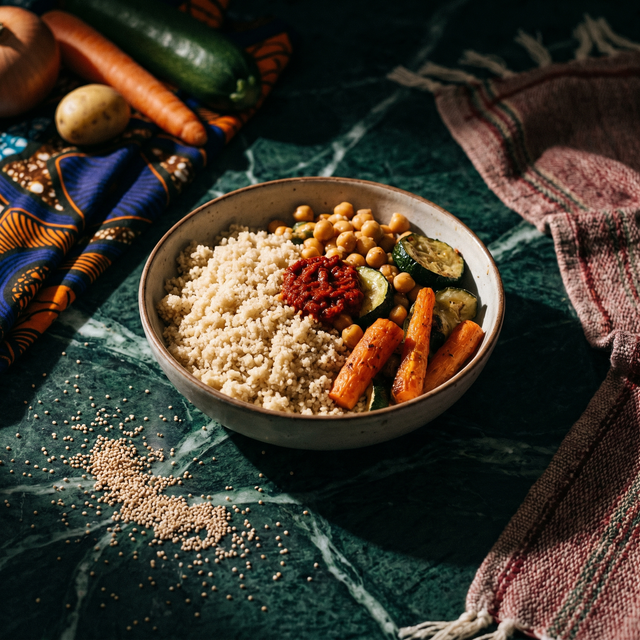
Small white grains steamed, a similar texture on the plate: Ivorian attiéké and Maghrebi couscous are often confused. Yet they are neither the same raw material, nor the same production, nor the same history.
Attiéké, the fermented cassava semolina of Côte d'Ivoire
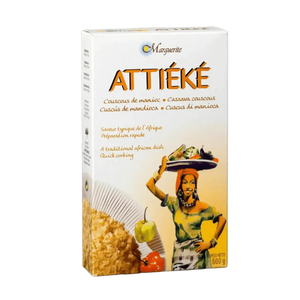
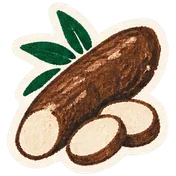
Attiéké is a fermented cassava semolina, made for generations by the women of the lagoon peoples of southern Côte d'Ivoire, including the Ébrié, the Adioukrou and the Avikam. The cassava is grated, fermented for one to two days, pressed, sieved and then steamed: this fermentation gives it its characteristic touch of acidity. The know-how involved in making it in Côte d'Ivoire has been listed as UNESCO intangible cultural heritage since December 2024.
Couscous, the durum wheat semolina of the Maghreb
Couscous is a durum wheat semolina, traditionally hand-rolled with flour and water to form small grains, then steamed three times before being air-dried; the version sold commercially is most often industrially pre-cooked. The word comes from the Berber seksu, “well rolled, shaped or rounded”. The oldest archaeological traces of couscous steamers date back to the third century BCE, at the time of the Berber king Massinissa in Numidia, in present-day Algeria. In December 2020, the knowledge, know-how and practices linked to the production and consumption of couscous were listed as UNESCO intangible cultural heritage, on a joint bid by Algeria, Morocco, Mauritania and Tunisia.
Five concrete differences
| Criterion | Attiéké | Couscous |
|---|---|---|
| Raw material | Cassava root | Durum wheat semolina |
| Production | Grating, fermentation, pressing, steam cooking | Rolling the semolina, steaming three times, drying |
| Geographic origin | Southern Côte d'Ivoire (lagoon peoples) | Maghreb (Berber peoples) |
| UNESCO recognition | December 2024 | December 2020 |
| Typical accompaniment | Braised fish, garba | Tagine, stewed vegetables |
Gluten and composition, the real difference to know
Attiéké is not one of the cereals or flours that contain gluten, such as wheat, rye, barley or oats: it is made solely from cassava. If you need to avoid gluten, still check the label of the product received, as traces remain possible. Couscous, on the other hand, is made from durum wheat and naturally contains gluten. Per 100 grams of dry product, attiéké provides 387 kilocalories, 92 grams of carbohydrates, 4.2 grams of fibre and 0.9 gram of protein; raw couscous grain provides around 352 kilocalories, 72.7 grams of carbohydrates, 4.3 grams of fibre and 12 grams of protein, the protein content of wheat being noticeably higher than that of cassava.
When to choose one or the other
- Ivorian cuisine: attiéké, with braised fish or garba.
- Maghrebi cuisine: couscous, with a tagine or stewed vegetables.
- If you avoid gluten: attiéké, which is not one of the cereals containing gluten, while still checking the label of the product received; durum wheat couscous, on the other hand, is the one to set aside.
Where to find these products in France
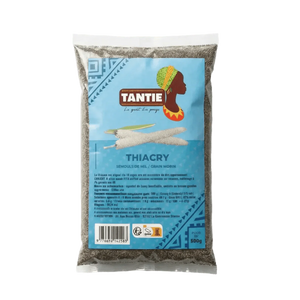
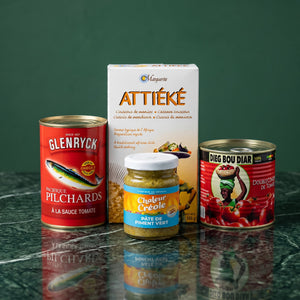
NKOSI sells the dry attiéké MARGUERITE, a cassava semolina from Côte d'Ivoire, and an Ivorian attiéké with fish kit bringing together the complete accompaniment. NKOSI does not sell durum wheat semolina for Maghrebi couscous, but offers the ESPIG couscous spices, the Moroccan blend for the couscous broth, as well as a very different West African cousin: TANTIE thiéré lalo, a millet couscous from Senegal.
Frequently asked questions
Does attiéké contain gluten?
No. Attiéké is not one of the cereals or flours that contain gluten: it is made solely from cassava. Still check the label of the product received, as traces remain possible.
Does couscous contain gluten?
Yes. Couscous is made from durum wheat semolina, a cereal that naturally contains gluten; it is not suitable for a gluten-free diet.
Where can you find the ingredients for attiéké in France?
NKOSI sells the dry attiéké MARGUERITE and ships it from the Paris area within 24 to 72 working hours, to mainland France (2 to 3 working days) and to ten European countries. The minimum order is 39 €: in France, delivery to a pickup point is then free, and home delivery is free from 69 €.
To find out more about this ingredient, see our complete guide to cassava.