









In brief
- Fonio couscous: a West African version of couscous, made with fonio instead of semolina
- Origin: West Africa, Senegal, Guinea, Mali
- Essential ingredients: fonio, seasonal vegetables, spices, a fragrant broth
- Setting: a modern recipe, a family meal for sharing
Origins and cultural history of Fonio Couscous
Fonio is an ancestral grain grown for thousands of years in West Africa, mainly in Senegal, Guinea, Mali and Burkina Faso. Nicknamed the grain of our ancestors, it was long eaten as porridge and in simple dishes. In recent years it has reached European tables, where it is also cooked as couscous or in salads.
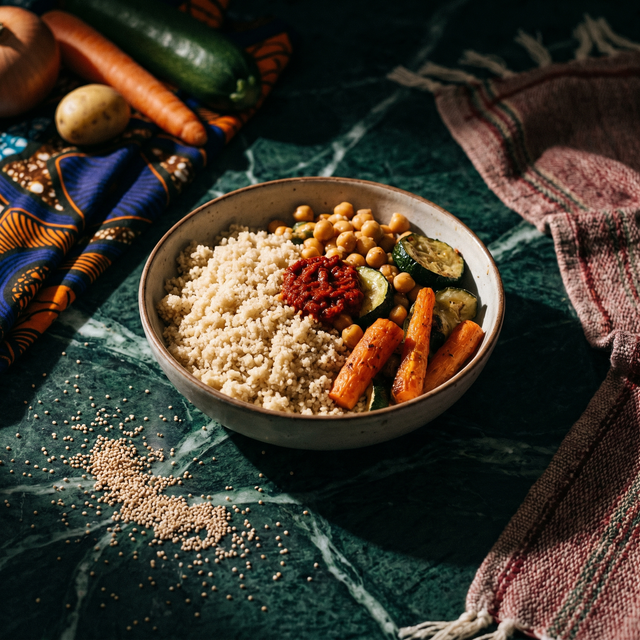
Fonio couscous is a modern take that blends West African tradition with North African cooking. Its grains, finer than durum wheat semolina, steam in just a few minutes. It appeals as much to the African diaspora attached to its heritage as to curious cooks who want to discover another grain.
What are the essential ingredients of Fonio Couscous?
The online African and Caribbean grocers, NKOSI among them, make fonio and spices available across France, Belgium, Switzerland and Luxembourg. Here are the essentials for making this modern dish.
- Pre-cooked fonio: the main cereal, ready in 5 minutes by steaming
- Carrots, turnips, courgettes: a variety of seasonal vegetables
- Chickpeas: creamy texture and a nutty taste
- Onion and garlic: the aromatic base of the broth
- Fresh tomatoes and tomato paste: colour and acidity
- Vegetable or chicken stock: flavours the fonio
- Spices: cumin, ginger, turmeric, paprika
- Fresh coriander: the final aromatic signature
- Olive oil or butter: to coat the fonio
What to know about fonio couscous
Fonio is not one of the cereals that contain gluten: if you need to avoid gluten, check for the gluten-free mention on the label, as a grain can be contaminated during processing. It goes well with couscous vegetables, chickpeas and North African spices such as ras-el-hanout.
It is served hot, in a large sharing dish, with the simmered vegetables and chickpeas arranged around the fonio.
Frequently asked questions about Fonio Couscous
Can fonio couscous be made the day before?
Yes, fonio keeps for 2 to 3 days in the fridge in an airtight container. Reheat it by steaming or in the microwave with a splash of water so it regains its light texture. The simmered vegetables also keep well.
How can fonio couscous be adapted for children or made vegetarian?
For children, reduce the spices and cut the vegetables into small dice. The vegetarian version is straightforward, since the fonio takes the place of the meat: just increase the chickpeas and the olive oil to keep you full.
Where can I find quality fonio in France?
The online grocery NKOSI offers pre-cooked fonio from Senegal, Guinea and Mali, along with all the spices and dried pulses you need. Head to nkosiagro.com to fill your basket, with fast delivery to France, Belgium, Switzerland and Luxembourg.
Find them in the NKOSI shop
- Couscous Spices ESPIG, Powdered Spice Blend, 100g
- Pre-cooked Fonio NUMBER ONE, West African Cereal, 1kg
- Ginger Powder Africa NUMBER ONE, 100g
For more flavours, browse our NKOSI catalogue: your online African and Caribbean grocery.