


African food is not a single cuisine but a set of regional culinary traditions, each built around its own staple starches, spices and cooking techniques. This guide presents the most iconic dishes of West Africa, Central Africa, the Maghreb and East Africa, and links to the ingredients and recipes to prepare them at home.
What is African food?
The African continent has 54 countries and hundreds of peoples, each with its own food habits. Common foundations are nonetheless found throughout: filling starches (rice, cassava, yam, millet, maize), long-simmered sauces, and a central place given to the meal shared with family. The tables and sections below detail the specialities by major region.
| Region | Iconic dish | Main base |
|---|---|---|
| West Africa | Thiéboudienne (Senegal) | Rice, fish, vegetables |
| Central Africa | Ndolé (Cameroon) | Bitter leaves, peanuts |
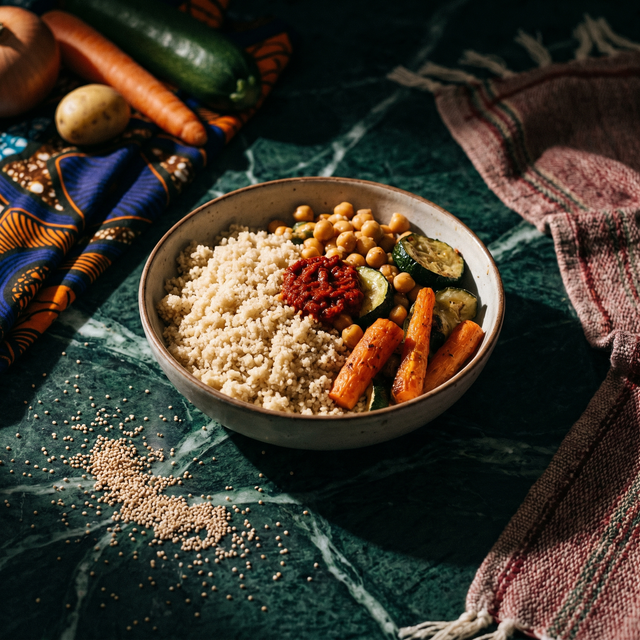
| Maghreb | Couscous | Durum wheat semolina |
| East Africa | Injera and ugali | Fermented teff, maize flour |
West Africa: thiéboudienne, mafé and yassa
Thiéboudienne (or ceebu jën, “fish and rice” in Wolof) is the national dish of Senegal. It was inscribed in December 2021 on UNESCO's Representative List of the Intangible Cultural Heritage of Humanity. Born in the fishing districts of Saint-Louis, it combines broken rice, fish, dried fish and seasonal vegetables simmered in a tomato sauce. Mafé, a peanut paste sauce native to the Mandinka and Bambara peoples of Mali, and yassa chicken, marinated in onions and lemon, round out the repertoire of this region, also shared by Côte d'Ivoire, Mali and Ghana.
Find these specialities in our Senegalese cuisine, Ivorian cuisine and Malian cuisine departments.
Central Africa: ndolé and cassava
Ndolé, regarded as the national dish of Cameroon, combines bitter leaves (Vernonia amygdalina), peanut paste and fish or meat. Native to the Cameroonian coast (Littoral region, Douala), it is traditionally served on special occasions. Cassava is the staple food here in all its forms: foufou, gari, cassava stick. Red palm oil, very present in Central Africa, colours and flavours many sauces.
Discover these products in our Central African grocery and Cameroonian cuisine departments.
Maghreb: couscous and tajine
Couscous, made from durum wheat, barley or maize semolina, was inscribed in December 2020 on UNESCO's Intangible Cultural Heritage of Humanity list, following a joint application filed by Algeria, Morocco, Mauritania and Tunisia. Tajine, slow-cooked in the earthenware dish of the same name, rounds out this repertoire, along with harira and pastilla. Our guide to Moroccan and Maghrebi cuisine details the spices and ingredients of this region.
The Moroccan and Maghrebi cuisine department brings together the corresponding products.
East Africa: injera and ugali
In Ethiopia and Eritrea, injera, a fermented flatbread made from teff flour (a cereal from the Horn of Africa), serves as both plate and bread to go with stews. In Kenya, Tanzania and Uganda, ugali, a compact dough of maize flour cooked in water, plays a comparable role: a staple starch that accompanies vegetables and grilled meats.
Iconic recipes to discover
- Yassa chicken: the Senegalese recipe with onions and lemon.
- Ndolé: the Cameroonian national dish with bitter leaves and peanut paste.
- Beef mafé: the Senegalese and Malian peanut paste sauce.
- Cassava foufou: the essential pounded side dish of West and Central Africa.
- Riz gras: the Ivorian recipe of rice slow-cooked with vegetables and meat.
Where to find these products in France?
All the ingredients mentioned in this guide are sold at NKOSI and delivered to mainland France and ten other European countries. A few examples: broken rice for thiéboudienne, red palm oil for Central African sauces, and gari to accompany your West African dishes. For details on each ingredient, see our guide to African and Caribbean cooking ingredients. Browse our full African and Caribbean grocery to put together your order.