
Moroccan cuisine is part of the broader Maghrebi cuisine, shaped by Berber, Arab and Andalusian influences. This guide presents its spices, its emblematic dishes and the mint tea ritual, and links to the corresponding products and recipes.
What is Moroccan cuisine?
Moroccan cuisine belongs to the Maghreb region, alongside Algerian, Tunisian and Mauritanian cuisines. It was built up over the centuries from Berber culinary practices, native to North Africa, then enriched by Arab and Andalusian contributions. Slow cooking, composed spice blends and the pairing of sweet and savoury are its most recognisable traits.
The essential spices of Moroccan cuisine
- Ras el hanout: a blend that can include anywhere from twenty to about fifty spices depending on who makes it; its name literally means “the head of the shop” in Arabic. It flavours tajines, couscous and marinades.
- Tajine spices: a Moroccan blend based on turmeric and salt combined with five other spices, for slow-cooked lamb, chicken or vegetable dishes.
- Couscous spices: a Moroccan blend designed to flavour the couscous broth.
Cumin, coriander, garlic powder and sesame are also basic Maghrebi spices, present in most Moroccan recipes.
The emblematic dishes of Moroccan cuisine
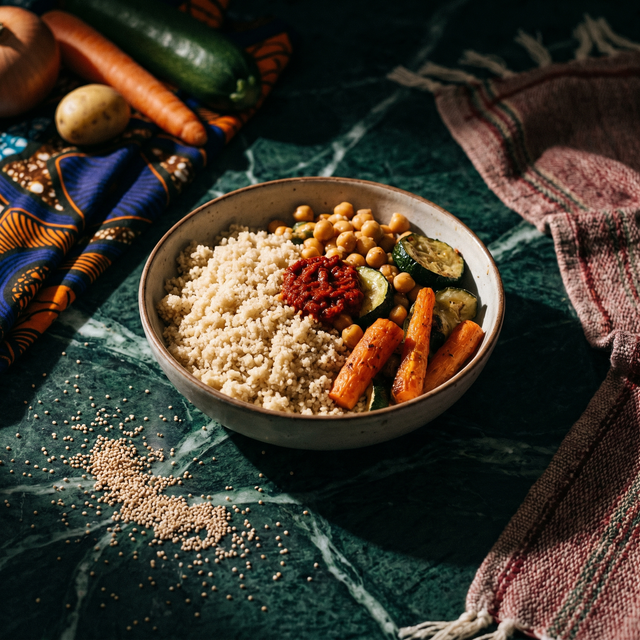
The tajine, an earthenware dish that gives its name to the stew it contains, has its origins in the culinary practices of the Berbers of North Africa: slow, covered cooking, developed to tenderise tough meats while saving water in mountainous and arid regions. Couscous, made from durum wheat, barley or maize semolina, was inscribed in December 2020 on UNESCO's Representative List of the Intangible Cultural Heritage of Humanity, following a joint application filed by Algeria, Morocco, Mauritania and Tunisia. Pastilla, a sweet-and-savoury filo pie made with ouarka pastry, is traditionally said to originate from the Marinid dynasty of Fez in the thirteenth century; however, this precise historical lineage has never been formally demonstrated by historians, who note only similarities with Andalusian recipes of the same century. Harira, a soup of tomatoes, lentils and chickpeas, is traditionally served to break the Ramadan fast.
Mint tea, a Maghrebi ritual
Moroccan mint tea combines a Chinese gunpowder green tea (leaves rolled into small pellets) with fresh or dried mint and sugar. Its adoption in the Maghreb reportedly dates back to the mid-nineteenth century: during the Crimean War (1853-1856), flows of gunpowder green tea intended for the Baltic are said to have been redirected to Moroccan ports, where this Chinese novelty met an already established tradition of mint infusions. Offering tea has since been part of the customs of hospitality, in Morocco as in several other countries of the Maghreb and the Sahara.
At NKOSI, gunpowder green tea serves both Senegalese ataya and Maghrebi mint tea; dried mint lets you prepare it at home.
Products for cooking Moroccan food at home
- Preserved lemons: whole lemons preserved in brine, a Moroccan condiment for flavouring tajines, stews and semolina dishes.
- Harissa: a chilli paste of Tunisian origin, used throughout Maghrebi cuisine, including Moroccan, to spice up couscous and grilled dishes.
Find these products and many others in our spices and sauces range.
Moroccan recipes to discover
- Moroccan tajine: the traditional lamb recipe.
- Chicken couscous: the Maghrebi Friday dish.
- Moroccan mint tea: the traditional tea recipe and its service.
- Chicken pastilla: the Moroccan sweet-and-savoury filo pie.
- Kefta tajine: Moroccan meatballs with eggs.
Where to find these products in France?
All the products presented in this guide are sold by NKOSI and delivered to mainland France and ten other European countries. Browse our Moroccan and Maghrebi cuisine range, or the whole of our African and Caribbean grocery. For the other cuisines of the continent, see our guides African food by region and ingredients of African and Caribbean cuisine.