
Ivorian cuisine brings together the culinary traditions of the country’s many ethnic groups, from the lagoon coast to the savanna north. Here are several dishes that give a glimpse of this diversity, useful for finding your bearings before cooking or ordering the ingredients in France.
1. Attiéké, the Fermented Cassava Semolina of the Lagoon Peoples
Attiéké is a dish made by steaming a semolina of fermented cassava pulp. Native to southern Côte d’Ivoire, it is a culinary specialty of the lagoon ethnic groups: Ébrié, Adioukrou, Alladian, Abidji, Avikam and Ahizi. See the attiéké with fish recipe and the cassava semolina guide.
2. Kédjénou, Chicken Stewed in a Closed Pot
Kédjénou is a slow-cooked stew, traditionally prepared with chicken or guinea fowl and vegetables, cooked covered in a closed pot without added water. It often accompanies attiéké. See the kédjénou recipe.
3. Alloco, Fried Plantain
Alloco is a ripe plantain, sliced then fried in oil. Its name comes from the word loko, in the language of the Bété people, in the west of the country; plantain is an important food resource of the forest zone in southern Côte d’Ivoire. See the Ivorian alloco recipe.
4. Garba, Abidjan’s Street Lunch
Garba pairs attiéké with pieces of fried tuna, chilli and onion. It entered Ivorian eating habits in the 1970s, when the then minister for animal production, Dicoh Garba, directed traders at the port of Abidjan toward tuna that had until then been discarded in large quantities. Sold in small street stalls, often run by Hausa traders, it remains the fast, cheap meal for young people in Abidjan. See the Ivorian garba recipe.
5. Sauce Graine, Palm Nut Sauce
Sauce graine gets its name from the oil palm’s nut, whose cooked and pounded pulp yields a thick, fragrant sauce. The nuts are boiled for about 45 minutes, then pounded and strained to separate the pulp from the fibres. This sauce traditionally accompanies foutou or placali. See the sauce graine recipe.
6. Foutou, Pounded Plantain or Yam Paste
Foutou is a pounded paste made from green plantain and cassava boiled together, or from yam boiled on its own, until a dense, elastic texture is reached. It differs from placali in that it involves no fermentation. See the green plantain foutou recipe and the yam foutou one.
7. Placali, Fermented Cassava Paste
Placali is a paste made from fermented cassava, then gently cooked, with a soft texture and a slightly tangy taste, distinct from foutou. See the placali recipe.
Where to Find Ivorian Ingredients in France?
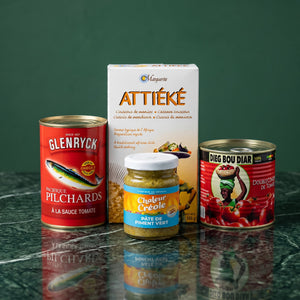
NKOSI sells several ingredients for these Ivorian recipes, including dry attiéké MARGUERITE, red palm oil and cassava flour for foutou, in its Ivorian cuisine collection.