

In brief
- Liboké is a marinated fish, wrapped and steamed in a banana leaf
- Origin: Democratic Republic of the Congo, Republic of the Congo, Congo River basin
- Essential ingredients: fish, banana leaves, onion, garlic, ginger, lime juice
- A dish cooked in a parcel, served straight from its leaf at family meals
Origins and cultural history of liboké
The word liboké (plural maboke) comes from Lingala, one of the national languages of the Democratic Republic of the Congo, and denotes both a dish and its cooking technique: food wrapped and steamed in a banana leaf. This practice is rooted in the Congo River basin, in both the Democratic Republic of the Congo and the Republic of the Congo, where it is used as much for everyday meals as for special occasions.
Fish, often Nile perch or another firm-fleshed fish, is the most common version, but the same technique applies to meat. The fish is marinated with onion, garlic, ginger, chilli and lime juice before being wrapped in the leaf and cooked in the oven or over embers, a gentle cooking method that concentrates the aromas inside the parcel.
What are the essential ingredients of liboké
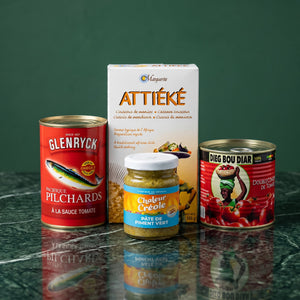
The preparation of liboké relies on a few ingredients found in African and Caribbean grocery stores, including NKOSI, with the exception of the banana leaves.
- fish
- banana leaves
- onion
- garlic
- ginger
- chilli
- lime juice
What to know about liboké
Liboké is fish marinated with onion, garlic, ginger, chili and lime juice, wrapped in a banana leaf and cooked in a sealed parcel, in the oven or over embers. The word, which comes from Lingala, refers to both the dish and this en papillote cooking technique, widespread in the Congo River basin. It is most often made with capitaine or another firm-fleshed fish, but the same technique applies to meat. The parcel is served directly in its leaf at family meals.
Frequently asked questions about liboké
Is liboké made only with fish?
No. Fish, particularly Nile perch, is the most common version, but meat, especially beef, is also prepared using the same banana-leaf parcel technique.
Can the banana leaf be replaced?
Yes, aluminium foil is the most commonly cited alternative when a banana leaf cannot be found, although cooking in the leaf remains the traditional version and gives the dish more flavour.
Where to find the ingredients for liboké in France?
NKOSI sells the palm oil, lime juice, fish stock cube and ground ginger for this recipe and ships them from the Paris area within 24 to 72 working hours, to mainland France (2 to 3 working days) and to ten European countries. The minimum order is 39 €: in France, delivery to a pickup point is then free, and home delivery is free from 69 €.