
The African baobab (Adansonia digitata) bears a fruit with a velvety shell, known as monkey bread, which holds a white, tangy pulp around hard seeds. Once dried and ground into powder, or sold in pieces, this pulp is diluted in water to prepare bouye juice, a traditional Senegalese drink. This guide presents the fruit, its sourced composition and its culinary uses.
What is the fruit of the baobab?
The African baobab grows from the Sahel to southern Africa, in dry savannahs. Its fruit is a large, velvety shell that holds seeds surrounded by a dry, floury pulp, naturally dehydrated on the tree. In French, this fruit is called pain de singe (monkey bread); in Wolof, the fruit is called bouye and the tree gouye. These are extremely long-lived trees: some specimens are said to be over two thousand years old, even though their exact age remains difficult to establish.
Baobab is sold in several forms:
- Powder: the dried, then ground pulp, ready to dilute.
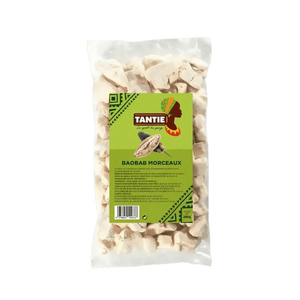
- Pieces: the pulp dried in chunks, still close to the seeds, to dissolve in water.
- Crushed: a texture in between the powder and the pieces.
- Infusion: the pulp combined with other ingredients, such as apple, for a hot or cold drink.
Not to be confused with lalo, baobab leaf powder, which is used to thicken certain savoury sauces: this is a different part of the tree, with a different regulatory status, not covered in this guide.
Origins and status of baobab in the European Union
An emblematic tree of the African savannahs, the baobab features in many cultures as a landmark, a meeting place or a symbol of longevity. Bouye juice holds a special place in West African cuisine: in Senegal, it accompanies celebrations and family gatherings, often flavoured with vanilla.
The dried pulp of the baobab fruit has been authorised for sale in the European Union since the Commission Decision of 27 June 2008 (2008/575/EC), which designates it under the regulatory name “baobab fruit pulp”. This authorisation covers the fruit pulp only: baobab leaves (lalo) are not covered by this same decision.
What is the composition of baobab pulp?
According to a synthesis of several studies published in a peer-reviewed journal, baobab pulp provides, on average, per 100 grams of powder: about 305 kilocalories, 5.3 grams of protein, 13.7 grams of fibre, 302 milligrams of calcium, 1,794 milligrams of potassium and 290 milligrams of vitamin C. These values vary considerably depending on origin and drying: vitamin C, for example, is measured between 209 and 360 milligrams per 100 grams depending on the sample.
The label on TANTIE baobab powder and pieces sold by NKOSI states, per 100 grams: 295 kilocalories, 0.6 grams of fat of which 0.2 grams of saturated fatty acids, 38 grams of carbohydrates of which 34 grams of sugars, 64 grams of dietary fibre, 2.4 grams of protein and a little less than 0.01 grams of salt. The gap with the scientific synthesis above (13.7 g of fibre on average) illustrates the natural variability of a wild fruit harvested in different regions.
How to use baobab powder and pulp?
- Bouye juice: allow 60 grams of powder and 50 grams of sugar per litre of water. Mix well, let it rest for an hour in the fridge, then serve very cold. Many people add milk, vanilla or orange blossom water. The juice keeps for three days in the fridge.
- Pieces: mix them with water until the pulp is fully dissolved, then strain to remove the fibres and seeds before sweetening. They can also be sucked directly, like tangy sweets; however, they contain hard pits, which need watching with young children because of a choking risk.
- Ngalakh: this Senegalese Easter dessert mixes baobab powder with peanut paste and thiakry, millet couscous.
- Every day: one to two teaspoons of powder in a yoghurt, a compote or a smoothie add a tangy note.
Powder, pieces or crushed: which format to choose?
Powder is the fastest: it dissolves directly in water or a drink, with no straining step. Pieces and crushed pulp are closer to the traditional gesture of bouye juice, with dissolving followed by straining out the fibres and seeds. Infusion, meanwhile, offers a milder hot or cold drink, blended with other ingredients such as apple. The choice mainly depends on the time you have and the intended use.
Recipes with baobab
For the traditional pulp-based drink, our bouye (baobab juice) recipe details the proportions and the steps. Baobab also appears in savoury cooking, but through another part of the tree: the Senegalese lalo sauce uses baobab leaves (lalo), not the pulp covered in this guide.
Where to find baobab in France?
NKOSI sells baobab pulp in several formats:
- RACINES organic baobab powder, dried and ground fruit pulp.
- TANTIE baobab powder, for bouye juice and ngalakh.
- TANTIE baobab pieces, dried pulp to dissolve or suck.
- RACINES organic crushed baobab, an in-between texture.
- RACINES African infusion baobab, baobab pulp and apple for a hot or cold drink.
Find the whole range in our exotic drinks collection.