


In brief
- Pondu: pounded cassava leaves, simmered differently depending on the region of Central Africa.
- Origin: the Democratic Republic of the Congo; the same dish is called saka-saka in Congo-Brazzaville and Angola.
- Essential ingredients: cassava leaves, palm oil, dried fish, peanut paste.
- A Sunday meal shared with family, throughout Central Africa.
Origins and cultural history of pondu
Pondu, whose name comes from Lingala, is one of the most widely shared dishes of the Democratic Republic of the Congo. The same dish of pounded cassava leaves is called saka-saka in Congo-Brazzaville and Angola. From one family and region to another, the base changes little: it is the protein and the side vegetables that vary.
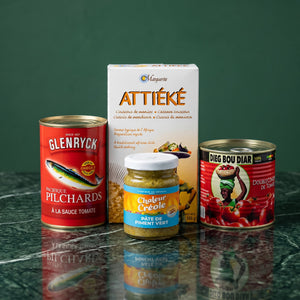
A widely documented variant, known as “from deep Congo”, adds to the base of pounded leaves some peanut paste stirred in at the end of cooking, along with local aubergines, smoked fish and peppers. Other, plainer versions, use only cassava leaf, palm oil and a fish of choice, fresh, smoked, dried or tinned sardines, depending on what the cook has on hand. This dish of pounded leaves should not be confused with matembele, prepared with sweet potato leaves, a plant different from cassava.
What are the essential ingredients of pondu
A base common to all variants, then additions that give pondu its regional character.
- cassava leaves, dried or fresh
- palm oil
- dried or smoked fish
- peanut paste
- local aubergine
- onion and garlic
- chilli
What to know about the pondu
The pondu is a dish of pounded cassava leaves, simmered with palm oil and fish, fresh, smoked or dried. Depending on the family, peanut paste is added at the end of cooking, along with local eggplant, onion, garlic and chili. Called saka-saka in Congo-Brazzaville and Angola, it is a Sunday meal shared with the family across Central Africa.
Frequently asked questions about pondu
What is the difference between pondu and saka-saka?
Almost none: it is the same dish of pounded, simmered cassava leaves, under two regional names, pondu in the Democratic Republic of the Congo, saka-saka in Congo-Brazzaville and Angola. Do not confuse it with matembele, a similar preparation made from sweet potato leaves.
What are the main regional variants of pondu?
Some families add peanut paste and aubergine at the end of cooking, a version sometimes called “from deep Congo”. Others stay plainer, with only palm oil and a fish of choice, fresh, smoked, dried or tinned sardines, depending on the household’s means.
Where to find the ingredients for pondu in France?
NKOSI sells dried cassava leaves, red palm oil, dried fish and peanut paste, and ships them from the Paris area within 24 to 72 working hours, to mainland France (2 to 3 working days) and to ten European countries. The minimum order is 39 €: in France, delivery to a pickup point is then free, and home delivery is free from 69 €.