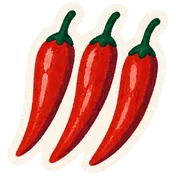






Caribbean chilli refers to several varieties of Capsicum chinense grown and used in Martinique and Guadeloupe, from the mild piment végétarien to the bondamanjak, one of the hottest chillies in the world. The piment oiseau (bird chilli), a different species that is also very hot, is often added to the group.
What is Caribbean chilli?
Caribbean chilli is not a single variety but a generic name covering several chillies of the species Capsicum chinense, native to Mexico and Central America, introduced and grown in the French Antilles. The piment végétarien is its mild version, with a slightly sweet taste once ripe: its name is said to come from a food-scarcity period in the 17th century in Martinique and Guadeloupe, when the population, deprived of meat, seasoned their vegetable dishes with this mild chilli. The bondamanjak (or Bonda Man Jak, “Madame Jacques’s backside” in Creole), on the contrary, is one of the hottest varieties in the Capsicum chinense family, alongside the habanero. Caribbean cuisine also uses the piment oiseau (or piment z’oiseau), which belongs to another species, Capsicum frutescens.
How hot is Caribbean chilli?
The heat of a chilli is measured on the Scoville scale, devised in 1912 by the American pharmacologist Wilbur Scoville. It assesses the concentration of capsaicin, the alkaloid responsible for the burning sensation in the mouth. The bondamanjak sits between 100,000 and 350,000 Scoville units, among the hottest chillies in the world; the Caribbean piment oiseau, for its part, sits between 30,000 and 50,000 Scoville units, well above cayenne pepper. Raw hot chilli provides, according to American composition data (USDA), between 144 mg and 242 mg of vitamin C per 100 g, depending on the variety and colour.
How to use Caribbean chilli in cooking?
Whole, a Caribbean chilli flavours a court-bouillon, a marinade or a simmered dish: it is removed at the end of cooking to control the heat. Finely chopped, it lifts a fish or chicken marinade, such as the one used for grilled sea bream in sauce chien or cod blaff. As a paste or sauce, such as green chilli paste or sauce créoline, it is added in small touches, during cooking or at the table, to a chicken colombo, cod accras or a Haitian pikliz. Handle Caribbean chilli with care and wash your hands after use.
Where to find Caribbean chilli in France?
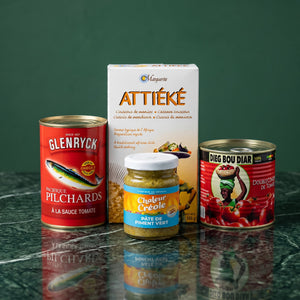
NKOSI sells whole dried piment fort oiseau CHALEUR CRÉOLE, green chilli paste CHALEUR CRÉOLE, sauce créoline forte DAME BESSON and sauce West Indian Papaya Hot Pepper ENCONA, made with habanero and scotch bonnet chillies, and ships them from the Paris area within 24 to 72 working hours, to mainland France (2 to 3 working days) and to ten European countries. The minimum order is 39 €: in France, delivery to a pickup point is then free, and home delivery is free from 69 €.
Going further
The blog also presents the most consumed chillies in Africa and how to store and use dried chillies.