
On August 7, 1960, Côte d'Ivoire achieved independence, after sixty-seven years under French administration. For the Ivorian diaspora, this date remains an occasion for festive meals bringing several generations together. Here is a festive menu made up of emblematic dishes of the country, with the ingredients to prepare it in France.
August 7, 1960, the independence of Côte d'Ivoire
France signed protectorate treaties over the Ivorian coast, at Grand-Bassam and Assinie, in 1842 and 1843; Côte d'Ivoire then became a French colony on March 10, 1893, then an overseas territory in 1946. In 1958, it gained the status of an autonomous republic within the French Community, before France accepted, on July 11, 1960, its full independence. This was proclaimed on August 7, 1960, at the end of a peaceful process, and Félix Houphouët-Boigny became the country's first president.
A festive menu for the occasion
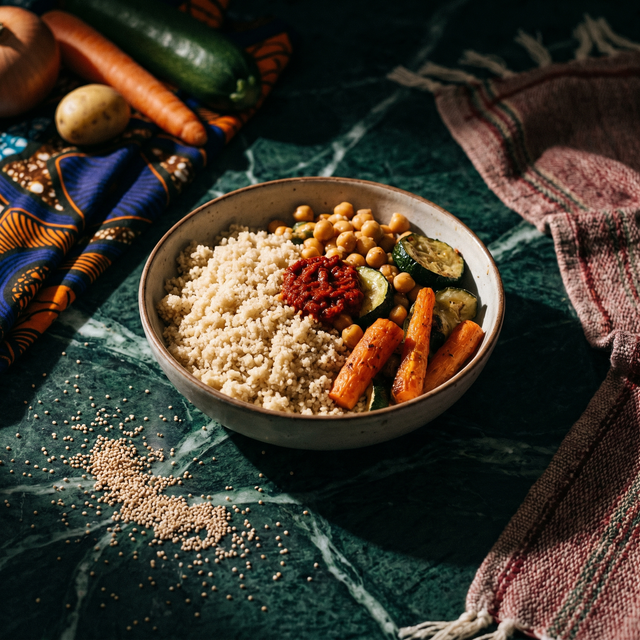
This menu brings together several emblematic dishes of Côte d'Ivoire, to put together for a festive meal.
Attiéké and braised fish
Attiéké pairs a steamed, fermented cassava semolina with braised or fried fish. Originating from the south of the country, among the lagoon peoples Ébrié, Adioukrou and Avikam, it is an everyday dish that also lends itself well to a festive meal. See the attiéké with fish recipe.
Chicken kedjenou
Kedjenou is a chicken stew simmered without added water or oil, in a hermetically sealed pot. It originates from the Akan peoples, notably the Baoulé, in the centre of the country, and is traditionally served with attiéké or foutou. See the chicken kedjenou recipe.
Alloco
Alloco, slices of well-ripened plantain, fried, is the country's emblematic street food, sold in the streets and markets, as an appetiser or as a side to a fish or meat dish. See the Ivorian alloco recipe.
Sauce graine and foutou
Sauce graine, simmered from palm nut pulp with beef or smoked fish, is traditionally a Sunday dish, also served at christenings and weddings. It accompanies foutou, a pounded paste of green plantain and cassava. See the sauce graine recipe and the plantain foutou recipe.
The ingredients for this menu in France
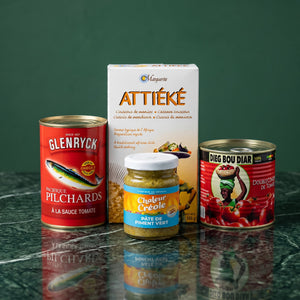
Find the ingredients for this festive menu: dried attiéké MARGUERITE, ground ginger for the attiéké and the kedjenou, palm oil for the alloco, and sauce graine TROFAI. This selection is gathered in our Ivorian cuisine collection.
Frequently asked questions
What is the date of Côte d'Ivoire's independence?
Côte d'Ivoire proclaimed its independence on August 7, 1960, after peaceful negotiations with France. Félix Houphouët-Boigny became its first president.
Which dish should be served first for this festive meal?
Attiéké with braised fish, the country's most widespread dish, makes a natural starting point, before the chicken kedjenou or the sauce graine, which take longer to prepare.
Where to find Ivorian ingredients in France?
NKOSI sells several ingredients of Ivorian cuisine (dried attiéké, ginger, palm oil, sauce graine) and ships them from the Paris area within 24 to 72 working hours, to mainland France (2 to 3 working days) and to ten European countries. The minimum order is 39 €: in France, delivery to a pickup point is then free, and home delivery is free from 69 €.