








In brief
- Jollof rice is rice simmered in a single pot, in a spicy tomato sauce
- Origin: West Africa, a region historically ruled by the Wolof empire of Djolof (present-day Senegal and Gambia)
- Essential ingredients: long-grain rice, tomatoes and tomato paste, onions, chilli, spices
- A festive dish, served at weddings, christenings and large family gatherings in West Africa
Origins and cultural history of jollof rice
The name jollof comes from the Wolof empire of Djolof (Jolof), which ruled part of present-day Senegal, Gambia and Mauritania from the fourteenth to the sixteenth century. The dish is also called benachin, “one pot” in Wolof, and, in Senegal, thiéboudienne: a fish and rice dish born in the fishing communities of Saint-Louis, which Senegalese oral tradition attributes to a nineteenth-century cook, Penda Mbaye, and which UNESCO recognizes as intangible cultural heritage.
Tomato and chilli, the central ingredients of today's version, reached West Africa through Portuguese trading posts in the fifteenth and sixteenth centuries: the tomato-based recipe as we know it today would therefore date more likely from the nineteenth century. The dish then spread along the West African coast under local names and versions, notably in Nigeria and Ghana, where a friendly rivalry still fuels debate today over the best version.
What are the essential ingredients of jollof rice
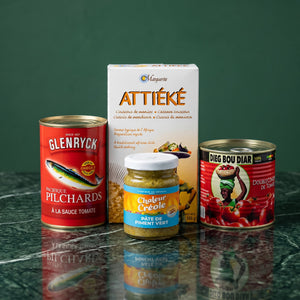
The jollof rice recipe relies on a handful of ingredients found in most African and Caribbean grocery stores, including NKOSI. Long-grain rice and tomato paste form the essential base of the dish.
- long-grain rice
- fresh tomatoes and tomato paste
- onions and red pepper
- scotch bonnet chilli
- garlic and ginger
- bay leaves, thyme and curry powder
- chicken stock
What to know about jollof rice
Jollof rice is rice simmered in a single pot in a spicy tomato sauce, widespread along the West African coast. It is made with long-grain rice, fresh tomatoes and tomato paste, onions, red bell pepper, scotch bonnet pepper, garlic, ginger, thyme, bay leaf and curry powder. It is a festive dish, also called benachin, “one pot” in Wolof, served at weddings, baptisms and large family gatherings.
Frequently asked questions about jollof rice
What is the difference between Nigerian jollof rice, Ghanaian jollof rice and Senegalese thiéboudienne?
All three dishes share the same Wolof origin and the same base of rice simmered in tomato sauce. Nigerian jollof puts the emphasis on tomato and is sometimes cooked over a wood fire for a smoky note; Ghanaian jollof rice often uses fragrant rice and a spicier sauce; Senegalese thiéboudienne, the older of the three, is prepared with fish and vegetables rather than chicken.
Why do some recipes use parboiled rice rather than fragrant rice?
Parboiled rice keeps firmer, separate grains after long cooking in the sauce, which stops it from falling apart. Fragrant rice, such as jasmine rice, gives a softer result: both versions exist depending on families and regions.
Where to find jollof rice ingredients in France?
NKOSI sells the long-grain rice, garlic powder, tomato paste, bay leaves, dried thyme, curry, ginger powder and chicken stock in this recipe on nkosiagro.com and ships them from the Paris area within 24 to 72 working hours, to mainland France (2 to 3 working days) and to ten European countries. The minimum order is 39 €: in France, delivery to a pickup point is then free, and home delivery is free from 69 €.