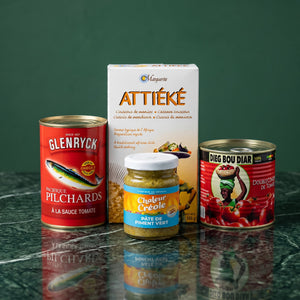




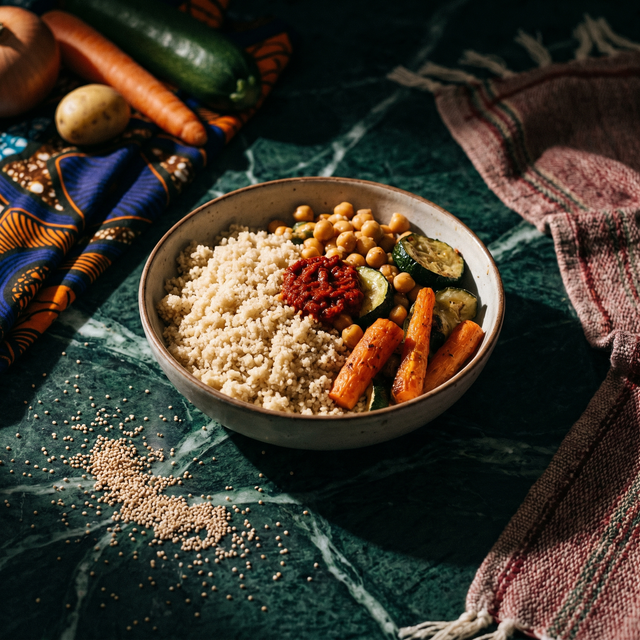

Ten ingredients are enough to make up a good part of the repertoire of West and Central African cooking: a fat base, a protein base, a starch, a grain, a legume, a base spice, a spice with character, a dried condiment and a drink. Here is a tight selection of ten names, with the precise use of each and the NKOSI product that matches it.
1. Red palm oil
Extracted from the pulp of the oil palm fruit (Elaeis guineensis), a tree native to the tropical forests of West and Central Africa, red palm oil has been used on the continent for several millennia. Its orange colour and strong taste give colour and flavour to palm nut sauce, groundnut sauce, jollof rice and plantain fritters. See the NUMBER ONE red palm oil.
2. Peanut paste
The base of Senegalese and Malian mafé, peanut paste is made from roasted then ground peanuts. Allow about 250 grams of paste per kilogram of meat, diluted in warm water before being poured into the tomato sauce. See the DAKATINE peanut paste.
3. Fonio
Fonio (Digitaria exilis) is one of the oldest domesticated cereals of West Africa, with a centre of origin located in the inland delta of the Niger river: in the fourteenth century, the explorer Ibn Battuta was already describing a couscous prepared with « founi ». Its grains, finer than those of millet, cook in a few minutes once pre-cooked and replace rice or semolina under a sauce. See the pre-cooked fonio.
4. Cassava flour, for foufou
Cassava is native to South America: it was Portuguese traders who introduced it to West Africa from the sixteenth century onward, where it became a staple food. Dried then ground, its root gives a flour that is mixed with boiling water to obtain foufou, a smooth, elastic paste eaten with the sauces of West and Central Africa. See the RACINES foufou and the cassava guide.
5. Broken rice
Double-broken rice, a jasmine rice variety whose grains were broken during milling, is the rice of Senegalese thiéboudienne: its broken grains soak up the fish sauce and give the dish its characteristic texture, even though this rice grows in Asia and not in Senegal. See the ORCHIDÉE 2x broken rice and the thiéboudienne recipe.
6. Niébé (black-eyed peas)
Niébé, or black-eyed pea, is a legume native to sub-Saharan Africa, domesticated several thousand years ago. Soaked then boiled, it is prepared in stews, as a side to rice, or crushed for the akara fritters of Nigeria and Benin. See the LEGUMOR black-eyed peas and the akara recipe.
7. Chili pepper
Chili pepper (Capsicum) is native to tropical America: like cassava, it was Portuguese traders who introduced it to the African coasts from the sixteenth century onward. Ground, it is used sparingly in sauces, marinades and simmered dishes, a pinch at a time. See the SAMIA ground hot chili.
8. Maniguette (Guinea pepper)
Maniguette, or grains of paradise (Aframomum melegueta), is a spice from the ginger family native to the Gulf of Guinea. It gave its name to the « Grain Coast », which Portuguese traders frequented from the fifteenth century onward to export it to Europe, where it then rivalled black pepper in price. Its peppery flavour, with citrus notes, flavours sauces, stews and marinades. See the NUMBER ONE maniguette.
9. Dried and smoked shrimp
Dried then smoked, often over beechwood, whole shrimp are a base condiment of the simmered sauces of Central and West Africa: rehydrated then crushed or added whole, they give their depth to Cameroonian ndolé, Nigerian ogbono soup or djoumblé sauce. See the NUMBER ONE dried and smoked shrimp and the ndolé recipe.
10. Bissap (dried hibiscus)
Bissap is made from the dried calyxes of the hibiscus flower (Hibiscus sabdariffa), steeped to prepare the red, tangy drink of Senegalese celebrations. The same flower has other names depending on the country: dableni in Mali, foléré in Cameroon, zobo in Nigeria, karkadé in Egypt, sorrel in Jamaica. See the TANTIE whole red bissap and the bissap guide.
To go further
This selection crosses several families of ingredients: for a complete view, sorted by family (spices, flours, starches, drinks) and by country, see the guide to African and Caribbean cooking ingredients or the overview of dishes and cuisines by region.