


Some mistakes come up again and again in African and Caribbean cooking, sometimes for lack of time, sometimes from not knowing an ingredient well. Here are eight common mistakes, why they cause problems, and how to avoid them.
1. Not soaking dried legumes before cooking
Black-eyed peas, pigeon peas, dried beans: skipping the soak makes cooking long and uneven, with some grains staying hard while others burst. Allow about eight hours of soaking for black-eyed peas or dried pigeon peas, then rinse them before boiling in water.
2. Undercooking dried beans
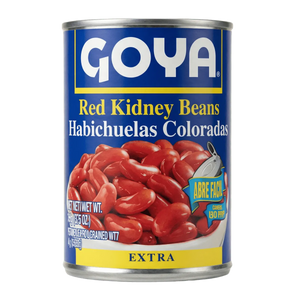
Dried beans from the kidney bean family, such as Congolese Ya Goma beans used for madesu, contain a natural toxin, phytohaemagglutinin, which is destroyed only by a vigorous boil of at least ten minutes. Cooking too gently, for example a long spell on very low heat in a slow cooker, is not enough to remove it and even makes the beans more of a problem than if they were raw: a few undercooked beans cause vomiting and diarrhea within a few hours. Always bring dried beans to a rolling boil before lowering the heat for the rest of the cooking.
3. Eating undercooked fresh cassava
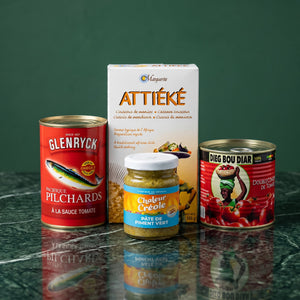
Raw cassava contains cyanogenic compounds, at levels that vary by variety: so-called sweet varieties can be peeled and cooked without much difficulty, while bitter varieties need more thorough processing, drying or fermentation, before eating. In every case, fresh cassava must be peeled and then boiled until tender, never eaten raw or just blanched. Dried products such as foufou flour or attiéké have already undergone this processing at the producer.
4. Undercooking pounded cassava leaves
Pondu, saka saka and ravitoto are made with pounded cassava leaves, which also contain cyanogenic compounds as long as they are not cooked enough: boil them for at least thirty minutes in a large amount of water, which is then discarded, before the final cooking in sauce. Dried cassava leaves rehydrate in thirty minutes, then need to be cooked just as long as fresh leaves.
5. Cutting okra too early or stirring it too much
Cut too early or stirred too much during cooking, okra releases its mucilage and gives a stringy dish that was not necessarily what you wanted. For okra that stays firm, cut it at the last moment, favor a short, brisk cooking time, and add a dash of lemon juice or vinegar at the end of cooking. Conversely, for a deliberately thickened sauce such as soupe kandia, it is this same texture, achieved through longer cooking, that gives the dish the result you are after. Our okra guide covers both techniques in detail.
6. Not desalting salted fish enough
Salt cod or makayabu: unrehydrated salted fish has a very high sodium content, in the region of 7,000 mg per 100 g. A soak that is too short leaves the dish too salty to eat: allow at least six hours, often twelve to twenty-four depending on the thickness of the pieces, in several changes of cold water.
7. Adding all the chili at once, with no way back
A chili pepper cut or crushed at the start of cooking releases all its heat at once, with no way to correct it afterward. Leave it whole instead and remove it at the end of cooking to control the result, taste as you go, and remove the seeds and the white membrane inside if you are cooking for sensitive palates. Our article explains how to control the heat in detail.
8. Using oil that is not hot enough for frying
For doughnuts such as puff puff or samosas, oil that is too cold, below 170°C, lets the dough soak up oil instead of quickly forming a crust: the doughnut becomes heavy and greasy. Aim for oil between 170°C and 180°C, testing with a small piece of dough that should rise back to the surface within a few seconds.
Going further
To learn more, see our cassava guide, our okra guide, and our article on storing dried chili peppers.