




Fonio, cassava and millet are three pillars of West African food, each behind a traditional dish. None of the three belongs to the cereals that naturally contain gluten, wheat, rye, barley and oats: here are three dishes built around them, from Mali to Senegal by way of Ivory Coast.
If you need to avoid gluten, this natural absence is not enough on its own: always check the ingredient list and any trace warnings on the label of the product you buy, especially for a blend or a processed product made in a workshop that also handles wheat.
Djouka, Mali's fonio with peanut paste
Grown in West Africa for around five thousand years, fonio (Digitaria exilis) is one of the region's oldest domesticated cereals, long before the arrival of imported rice. In Mali, it becomes djouka: the grain, parboiled then steamed, is mixed with a sauce made from peanut paste. Native to the Sahelian regions stretching from eastern Senegal to Mali, in particular Kayes, Ségou and Mopti, this dish has spread across the whole country. The full recipe is in the djouka guide, to prepare with parboiled fonio for djouka.
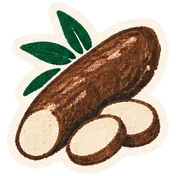
Attiéké, Ivory Coast's fermented cassava semolina
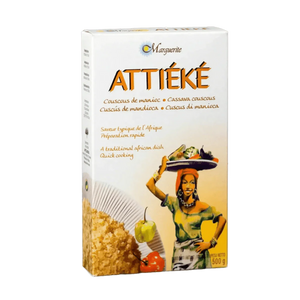
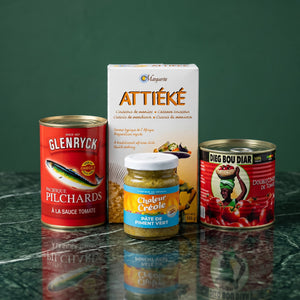
In Ivory Coast, cassava becomes attiéké: the root is grated, fermented then pressed, before being shaped into fine semolina grains and steamed for about fifteen minutes. This steaming sets attiéké apart from gari, where the same grated cassava paste is sun-dried rather than cooked. Traditionally served with grilled fish, attiéké is made with dried attiéké; the full preparation is explained in the attiéké guide.
Thiakry, Senegal's sweet millet semolina
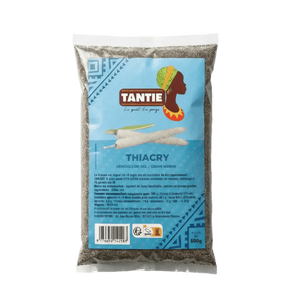
In Senegal, millet semolina is the base of thiakry, a curdled milk dessert known as dégué in Mali and Ivory Coast. The semolina swells in hot water, then is mixed with curdled milk or sweetened plain yoghurt, sometimes flavoured with vanilla or orange blossom. The recipe is detailed in the article on thiakry, made with millet semolina for thiakry.
Going further
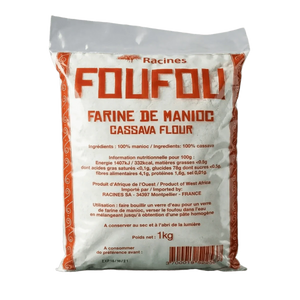
For other uses of cassava, foufou, gari, chips, see the cassava guide, or browse the African cereals and grains collection to compare fonio, millet and sorghum.