




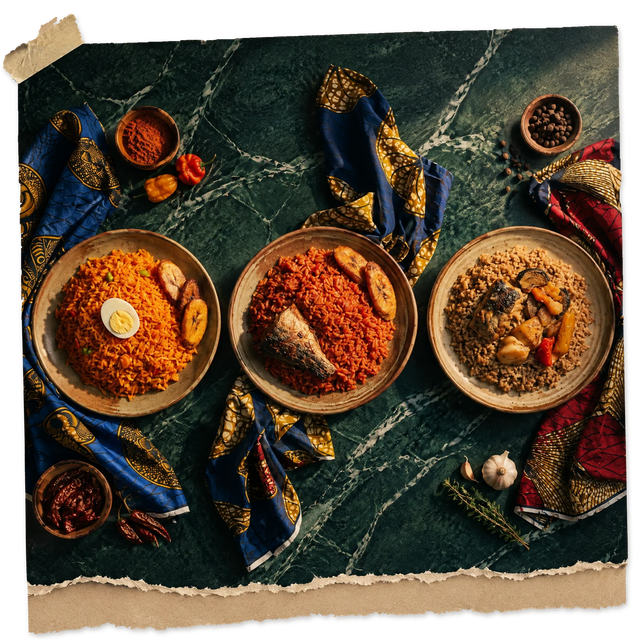
Every 22 August, West Africa celebrates World Jollof Day, a day dedicated to the most iconic dish of the continent: jollof rice. But behind this celebration lies an intense culinary rivalry: who makes the best jollof rice, Nigeria, Ghana or Senegal (with its thieboudiène, the ancestor of jollof)? This friendly war that has animated social media and family tables for decades is more than a culinary debate; it is a marker of national and diaspora pride. Here is everything you need to know about Jollof Day 2026.
The origin of jollof: back to the roots
Jollof rice traces its origin to the Wolof empire, or Jolof, which stretched across present-day Senegal from the 14th to the 16th century. The ancestral dish, named thieboudiène in Wolof (literally rice with fish), is the grandfather of all the variations. With the slave trade and migrations, the recipe spread across West Africa and evolved according to the regions: fish in Senegal, meat and vegetables in Ghana, spicy tomato sauce in Nigeria.
Nigerian jollof: the most globally known version
Nigerian jollof is probably the most consumed and the most reproduced in the diasporas. Its signature: a long-grain rice (basmati or parboiled) cooked in a spicy tomato sauce made from fresh tomatoes, onions, scotch bonnet chillies, ginger, garlic and spices (curry, thyme, bay leaves). Cooking in the oven or in a sealed pot produces the famous party jollof with its smoky taste obtained by caramelisation at the bottom of the pot. Discover our jollof rice recipe.
Ghanaian jollof: aromatics and patience
Ghanaian jollof bets on aromatic depth. Its preparation incorporates fragrant rice (basmati or jasmine), a very reduced peeled tomato sauce, aromatics like shitor (Ghanaian smoked chilli sauce) and often chicken roasted separately. Darker red than the Nigerian version, it is considered by Ghanaians to be the authentic one.
Senegalese thieboudiène: the fish ancestor
For Senegalese people, talking about jollof means talking about thieboudiène (or tieb-bou-dien), the national dish inscribed in 2021 on the UNESCO intangible heritage list. Its singularity: the presence of a fish (often grouper) stuffed with herbs (rof), the rice cooked in the reduced broth which colours it brown-orange, and the addition of vegetables (cassava, carrots, turnips, aubergines) served around the rice. Our thieboudiène recipe pays tribute to the ancestor.
Key takeaways
- The Senegalese thieboudiène is the historical ancestor of jollof, documented since the 14th century
- The Nigerian jollof dominates on social media thanks to afrobeats pop culture
- The Ghanaian jollof claims aromatic authenticity
How to celebrate Jollof Day 2026 in France
On 22 August 2026, you can take part in this global celebration in several ways:
- Cook the 3 versions and organise a comparative tasting with the family
- Share photos and results on Instagram with the hashtags #JollofDay #JollofWars #WorldJollofDay
- Invite friends from the diaspora and celebrate the rivalry in a friendly way
- Learn the ancestral recipe, the thieboudiène, to understand the origin
Which ingredients to plan for?
To prepare the 3 versions, you will need:
- Long-grain or broken rice: Orchidée broken rice for the Senegalese version
- Tomato concentrate, onions, garlic, ginger
- Scotch bonnet chillies for the Nigerian and Ghanaian versions
- Grouper or mullet fish for the thieboudiène
- Spices: curry, thyme, bay leaves, Maggi cube
- Red palm oil or sunflower oil depending on the version
Conclusion
Jollof Day is above all a celebration of the richness of West African cuisine and of unity in diversity. Rather than settling the jollof war, let's celebrate the 3 versions and their shared history. All the ingredients are available at our NKOSI online grocery, with fast delivery to France and across Europe. And to go further, read our Senegalese thieboudiène recipe.
Frequently asked questions
Which is the best jollof rice: Nigerian, Ghanaian or Senegalese?
All three have their fans. The Nigerian is the most popular in pop culture, the Ghanaian is considered more aromatic, and the Senegalese thieboudiène is the historical ancestor recognised by UNESCO.
When is World Jollof Day?
World Jollof Day has been celebrated every 22 August since 2015, on the initiative of chefs and bloggers from the West African diaspora to honour this heritage dish.
Where can I buy the ingredients to prepare a real jollof rice in France?
The NKOSI online grocery at nkosiagro.com offers all the authentic ingredients: Senegalese rice, West African spices, chillies, dried fish, with delivery to France, Belgium, Switzerland and Luxembourg.