


Plantain and dessert bananas both belong to the genus Musa, but they are neither eaten nor cooked in the same way. Here are their differences, based on their botanical classification, their composition and their culinary uses.
Same Family, Two Different Groups
Cultivated banana plants descend from two wild species, Musa acuminata and Musa balbisiana, which gave rise to several genetic groups. The dessert banana, such as the Cavendish variety, the most widely traded in the world, most often belongs to the AAA group. The plantain belongs to the AAB group: it contains more starch and less sugar, which is why it is always eaten cooked, never raw.
Origin and Spread
The genus Musa is native to Southeast Asia and Oceania. Plantain trees spread to Africa from the first millennium onward, with archaeological traces identified in Cameroon, then to the Caribbean, Central America and part of South America, where they became a staple food. The Cavendish dessert banana, meanwhile, became dominant in world trade in the 1950s, after Panama disease decimated the previously dominant variety, the Gros Michel.
What the Composition Shows
Per 100 grams of raw flesh, the Ciqual table from Anses gives the following values.
| Per 100 g raw | Dessert banana | Plantain |
|---|---|---|
| Genetic group | AAA | AAB |
| Energy | 83 kcal | 127 kcal |
| Carbohydrates | 19.7 g | 29.6 g |
| Fiber | 2.7 g | 2.3 g |
| Protein | 1.06 g | 1.3 g |
| Potassium | 320 mg | 499 mg |
| Vitamin C | 7.16 mg | 18.4 mg |
How Each One Is Cooked
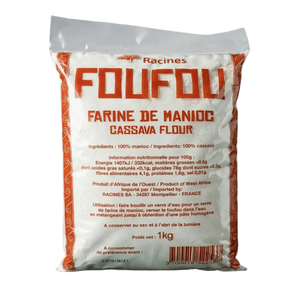
The dessert banana is eaten raw, plain or in a smoothie. The ripeness of the plantain determines how it is used: green, it is firm and starchy, reserved for savoury dishes, boiled, grilled, fried or pounded into foutou; fully ripe, its skin blackens and its sweet flesh lends itself to milder preparations, such as Ivorian alloco, fried slices. In the Caribbean and Latin America, the green plantain is also prepared as tostones or patacones, flattened and fried twice.
Frequently Asked Questions
Is the Plantain a Fruit or a Vegetable?
Botanically, it is a fruit, like the dessert banana: both grow on the same type of plant, a banana tree. It is almost always cooked savoury, which is why it is sometimes mistaken for a vegetable.
Can Plantain Be Eaten Raw?
This is not the custom: raw, especially green, it is very starchy, firm and unpleasant to eat. It is eaten boiled, grilled, fried or pounded.
Where to Find Plantain Products in France?
NKOSI does not sell fresh plantain, but offers chips that are made directly from it, such as ripe plantain chips and salted plantain chips, in the plantain collection. To find out more, our article on the composition and uses of plantain and our plantain and alloco guide page complete this comparison. See also the recipe for Ivorian alloco.