


African cooking relies on spices and condiments rarely found in supermarkets. Here are seven of them, with their origin and their precise use in cooking.
1. Kankan, a West African grilling spice
Born in the Hausa tradition of Niger and northern Nigeria, where it is called yaji, kankan (or kankankan) is a powdered spice blend that seasons grilled meat: skewers, choukouya, grilled chicken. It is rubbed or sprinkled onto the raw meat before grilling. Its composition varies by maker and often contains peanut, an allergen to check on the packet. See the CATALEYA kankan spice.
2. Akpi (djansang), the seed that thickens Cameroonian sauces
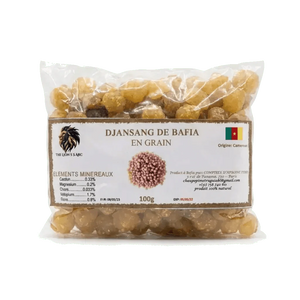
Akpi, also called djansang or ndjansang, is the kernel extracted from the seed of Ricinodendron heudelotii, a tree that grows from Senegal to Cameroon. Ground, it adds a buttery note and thickens sauces, notably ndolé and groundnut sauce: it is diluted in a little warm water before being stirred in, then left to simmer. See the THE LIONS ground Bafia djansang and the djansang (akpi) guide.
3. Mbongo, the forest seeds of Cameroonian black sauce
Mbongo tchobi refers both to the dish, a black sauce with fish or meat, and to the blend of Cameroonian forest seeds (njansang, pébé, four sides, mbongo) that gives it its colour and smoky taste. Roasted then pounded, these seeds darken as they cook. See the NUMBER ONE whole-grain Littoral mbongo tchobi and the mbongo tchobi recipe.
4. Sélim grains, the Guinea pepper of café touba
In French, « piment noir » or « poivre de Guinée » also refers to sélim grains (Xylopia aethiopica), a spice that grows wild in West and Central Africa. It traditionally flavours Senegalese café touba, and is also used to season the sauces of pounded plantain or cassava pastes (foutou, foufou). See the NKOSI piment noir (Guinea pepper) and the foufou, fufu, foutou guide.
5. Maniguette, West African grains of paradise
Maniguette, or grains of paradise, is the fruit of Aframomum melegueta, a plant from the ginger family native to the Gulf of Guinea: it is not a true pepper of the Piper genus, even though it carries the name. Crushed in a mortar just before cooking, its peppery, lemony-tasting seeds hold up well to long cooking: they suit sauces and simmered stews. See the NUMBER ONE maniguette pepper.
6. Essèssè (four sides), Cameroon's tangy spice
Essèssè, or four-sides spice, is the dried fruit of Tetrapleura tetraptera, a four-ridged pod also found in Ghana under the name prekese and in Nigeria under the names aridan or uhio. Ground, it flavours the Bamileke yellow sauce and mbongo tchobi at the end of cooking with a tangy, aromatic taste. See the ground four-sides spice.
7. Ras el hanout, the Maghreb tajine blend
Ras el hanout literally means « head of the shop » in Arabic: the expression traditionally refers to the best spice blend offered by each Maghreb spice merchant, with no fixed recipe from one maker to another. SAMIA's blend combines coriander, turmeric, cumin, fenugreek, ginger, caraway, fennel and garlic: it is added at the start of cooking in a tajine or a couscous. See the SAMIA ras el hanout.
Where to find these spices in France?
These seven spices are sold by NKOSI, in the African and Caribbean spices and condiments section, alongside the rest of the range of African and Caribbean cooking ingredients.