








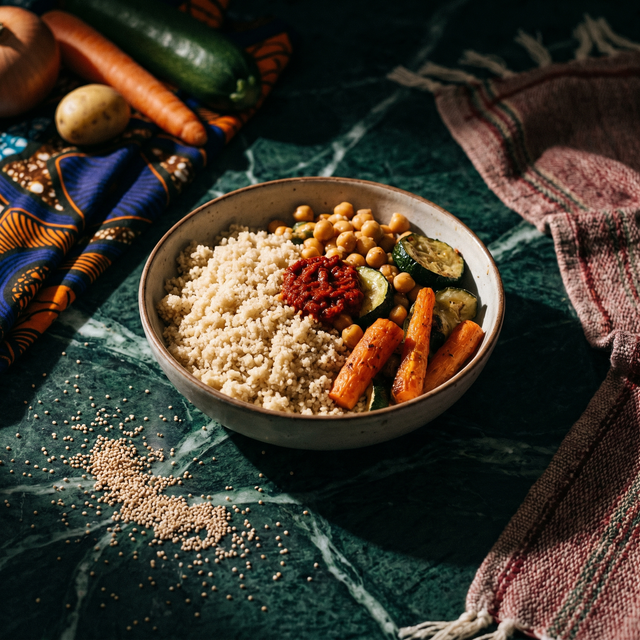

There is no single African cuisine, but a multitude of culinary traditions depending on the region, the climate and the people. Here are five concrete ways to vary your plate every day by drawing on this broad repertoire: starches, legumes, green leaves, cooking techniques and condiments.
1. Change your starch from one meal to the next
Rice is just one base among others. Fonio, one of the oldest domesticated cereals in West Africa, cooks in a few minutes once parboiled and replaces rice or semolina under a sauce. Millet and sorghum, cereals of the Sahel, are prepared as porridge or semolina (Senegalese thiéré or sankhal). Yam, cassava and plantain, essential tubers of Central and West Africa, are pounded, fried or turned into flour for foufou. See the parboiled fonio, the millet sankhal and the cassava guide.
2. Add dried legumes to your sauces
Niébé, also called black-eyed pea or cowpea, is the most widely eaten legume in Sub-Saharan Africa: it goes into stews, fritters and side dishes. Pigeon pea, or gungo pea, is a tropical legume found in both Caribbean and African cuisines, in stewed dishes or as a side for rice. See the LEGUMOR black-eyed peas and the LEGUMOR dried pigeon peas.
3. Cook local green leaves as a side dish
Cassava leaves, simmered for a long time, take on a tender texture close to spinach once cooked, and form the base of pondu and saka saka in Central Africa. In West Africa, the dish “fonio with leaf sauce” pairs fonio grain with a sauce of sweet potato, cassava or moringa leaves depending on the region. See the NUMBER ONE dried cassava leaves.
4. Rediscover fermentation and steam cooking
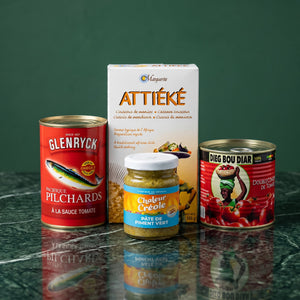
Ivorian attiéké starts with grated cassava that is fermented, before being pressed, shaped into fine grains and steamed for about fifteen minutes. Chikwangue from Central Africa follows a similar path: peeled and ground cassava ferments in water for several days, then the resulting paste is wrapped in banana leaves and steamed for around an hour and a half. Two techniques different from frying, covered in the attiéké guide and the article on chikwangue.
5. Change your condiment and spice from one dish to the next
The same starch changes character depending on the spice or condiment that goes with it: kankan for grilled meat, ras el hanout for a tagine, mbongo tchobi for a Cameroonian black sauce. Our selection of essential African spices details seven of them.
Going further
For a complete view of ingredients by family, see the guide to African and Caribbean cooking ingredients or our article on ingredients to keep on hand in your African and Caribbean pantry.