

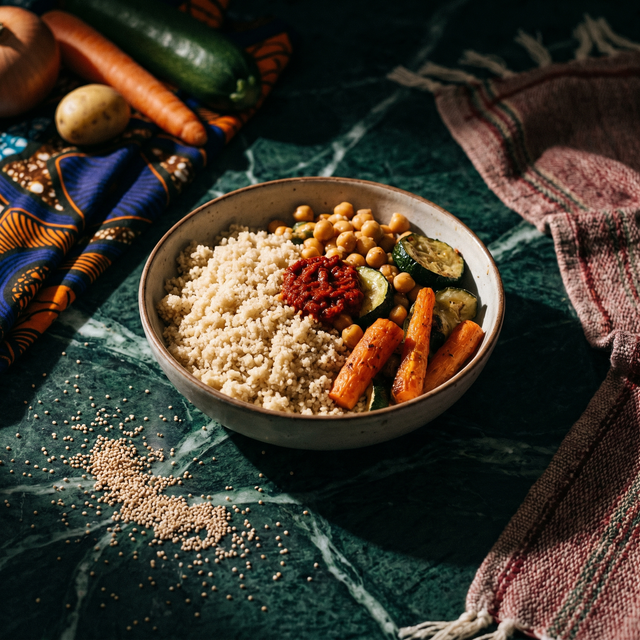


Thiéré is the millet couscous of Senegal: a millet semolina rolled into fine grains, steamed to cook. KEBA offers it plain, without lalo, in a 500 g pack, origin Senegal. It is served with a sauce, such as bassi salté, or with sweetened curdled milk.
What is thiéré?
Thiéré is the French spelling of the Wolof word cere, which refers to millet couscous. The Fulani say lacciri, the Bambara basi. Do not confuse it with its cousins: sankhal is a cracked millet for porridges, thiakry has coarser granules, reserved for the curdled-milk dessert, and arraw is used for small-ball porridges. The label of this thiéré lists only one ingredient, millet: if you like couscous bound with lalo, you add it yourself.
How to cook it?
- Moisten the semolina with a little water, rubbing it between your fingertips.
- Steam it in a couscoussier, in two or three passes.
- Between each pass, tip it into a large dish, air it out and break up the lumps by hand.
- On the last pass, stir in a little lalo diluted in water if you wish.
Cooked in a single pass, like wheat semolina, it becomes pasty. On the savoury side, it is served as bassi salté, with a tomato sauce with meat and vegetables (carrot, sweet potato, cabbage, black-eyed peas), or with a peanut sauce. On the sweet side, cold, with sweetened curdled milk.
What to pair it with?
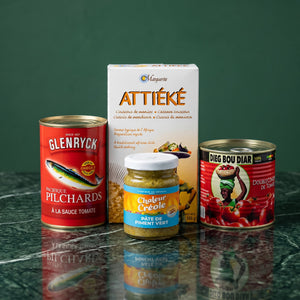
For the sauce: DAKATINE peanut paste or DIEG BOU DIAR double tomato paste. For the sweet version: NIDO powdered milk. The other millets: TANTIE sankhal and KEBA millet thiakri. The whole range: Senegalese cuisine.
Product information
- Brand: KEBA
- Capacity: 500 g pack, according to the manufacturer's label
- Ingredient: millet thiéré
- Origin: Senegal
- Allergens: none of the 14 regulated allergens by nature. The pack does not carry a “gluten-free” certification.
- Storage: in a dry place, at room temperature
- Average nutritional values per 100 g: energy 369 kcal, fat 0.8 g, carbohydrates 73.1 g of which sugars 0.2 g, protein 8.5 g, salt 0.02 g