






In brief
- Dambou: millet or wheat couscous steamed and mixed with moringa leaves (or spinach)
- Origin: Niger, among the Zarma and Songhai peoples of the southwest of the country
- Key ingredients: millet semolina, moringa leaves (or spinach), onion, chilli, stock, oil
- Served at christenings and weddings, but also as an everyday dish
Origins and cultural history of dambou
Dambou is a dish originating in the southwest of Niger, associated with the Zarma and Songhai peoples. It is also found among the Dendi in Benin, and in Zarma and Songhai communities settled elsewhere in West Africa. It is made from a steamed grain, semolina or couscous of millet, wheat or maize depending on the household, mixed with moringa leaves that have been boiled beforehand.
It is eaten at any time, but holds a special place at celebrations, such as newborn christenings and weddings. Traditionally served with meat, fish or a sauce, dambou remains a sharing dish, often served in one large communal dish.
What are the key ingredients of dambou
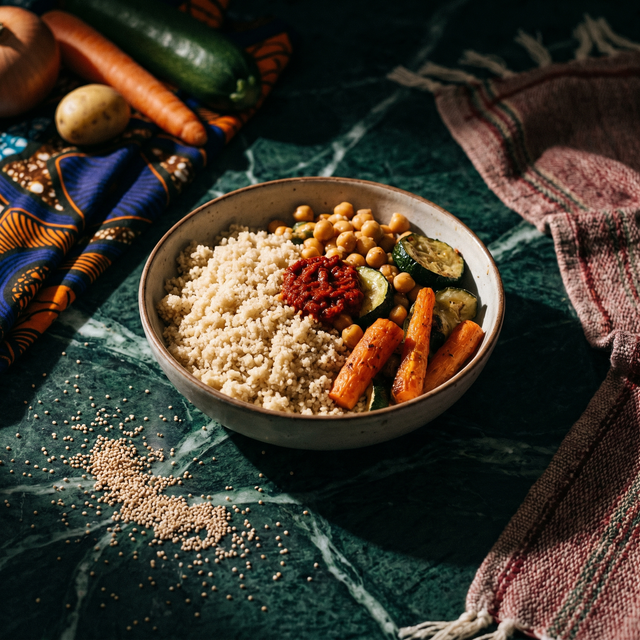
Dambou combines steamed semolina, prepared like couscous, with boiled green leaves and simple seasoning.
- Millet semolina or couscous (or wheat)
- Moringa leaves, or spinach if unavailable
- Onion and chilli
- Stock
- Vegetable oil
- Roasted peanuts, for crunch
What to know about dambou
Dambou is a dish from Niger: millet, wheat or corn semolina or couscous, steamed and mixed with boiled moringa leaves, or with spinach if there are none. It is seasoned with onion, chilli, stock and vegetable oil, sometimes with roasted peanuts for crunch. Originally from the south-west of Niger, among the Zarma and Songhai, it is served every day as well as at baptisms and weddings, often on a large shared dish, with meat, fish or a sauce.
Frequently asked questions about dambou
Is dambou made with baobab leaves?
No: traditional dambou is made with moringa leaves, or spinach if unavailable, not with baobab leaves. It is the dried, ground leaves of baobab, called lalo, that go into a different West African recipe, lalo sauce.
Which cereal is used for dambou?
Traditional dambou is made with millet, wheat or maize, depending on the region and household in Niger. Millet semolina or couscous, steamed like a classic couscous, is a common base and pairs well with moringa leaves.
Where to find the ingredients for dambou in France?
NKOSI sells the millet couscous, dried moringa leaves and roasted peanuts used in this recipe, and ships them from the Paris area within 24 to 72 working hours, to mainland France (2 to 3 working days) and to ten European countries. The minimum order is 39 €: in France, delivery to a pickup point is then free, and home delivery is free from 69 €.