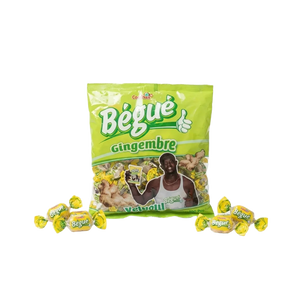






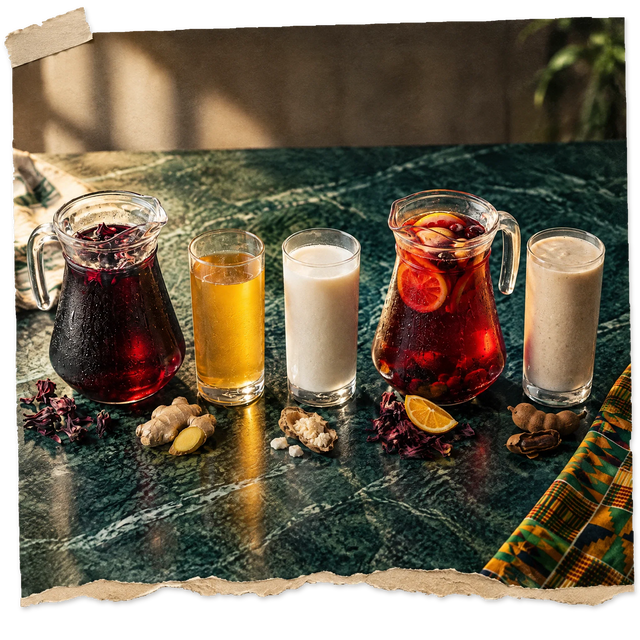
Beyond the famous bissap, the African continent abounds in unique traditional drinks, rich in flavours and carrying thousand-year-old stories. From fermented Ethiopian tej to Hausa kunu, by way of Nigerian zobo and the West African baobab smoothie, these drinks deserve their place in any Caribbean and African grocery. Here is our selection of the 5 essential African drinks, with their origins, their tastes and their availability in France.
1. Bissap: the purple queen of Senegal
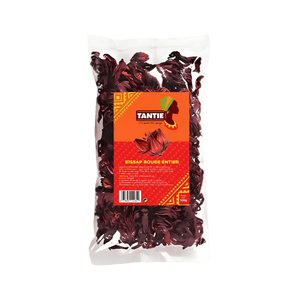
Bissap, an infusion of dried hibiscus flowers, is probably the best-known African drink in the world. Originating in West Africa, particularly Senegal, Mali and Burkina Faso, it is served cold, sweetened, scented with mint or vanilla. Its intense ruby colour and slightly tangy taste make it the perfect refreshment for summer afternoons. Discover our homemade bissap recipe to prepare it properly.
2. Tej: the sacred mead of Ethiopia
Tej is a fermented honey wine, iconic of Ethiopia and Eritrea. Made from wild honey, water and gesho leaves (a local shrub related to hops), it is traditionally served in a berele, a long-necked flask. Its fermentation can last several weeks and its alcohol content varies according to the recipes. It is the festive drink par excellence in Ethiopia.
3. Kunu: the dawn smoothie of northern Nigeria
Kunu is a Hausa drink made from fermented millet, sorghum or corn, scented with ginger, cinnamon and clove. Creamy and lightly spiced, it is consumed daily by millions of Nigerians, particularly at breakfast or during Ramadan to break the fast. It comes in several variants: kunu zaki (millet), kunu aya (tiger nut), kunu gyada (groundnut).
4. Zobo: the festive Nigerian version of bissap
Zobo is the Nigerian version of hibiscus infusion, but with a distinctive signature: the addition of pineapple juice, fresh ginger and sometimes clove. More aromatic and spicy than Senegalese bissap, it is served at Nigerian parties and celebrations.
5. The baobab smoothie: a liquid superfruit
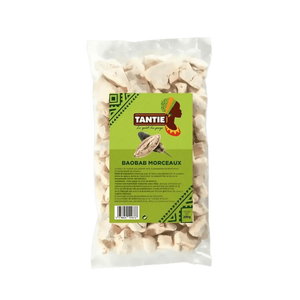
Baobab juice, or bouye in Wolof, is obtained from the white pulp of the fruit of the baobab tree. Mixed with water, sugar and sometimes milk, it produces a creamy, slightly tangy drink, exceptionally rich in vitamin C (10 times more than the orange) and in antioxidants. It is an African superfood that is becoming more widely available in Europe.
Comparison table of the 5 African drinks
| Drink | Origin | Taste | Serving |
|---|---|---|---|
| Bissap | Senegal, West Africa | Tangy, floral | Cold, sweetened |
| Tej | Ethiopia | Sweet, honeyed, alcoholic | Room temperature |
| Kunu | Northern Nigeria | Creamy, spiced | Cold, morning |
| Zobo | Nigeria | Tangy, ginger-pineapple | Cold, sweetened |
| Baobab smoothie | West Africa, Sahel | Creamy, tangy | Cold, blended |
When to choose which drink?
- Family summer refreshment: bissap or zobo, alcohol-free, pleasing to children and adults alike
- Festive adult drink: Ethiopian tej for an original experience at a meal
- Nourishing breakfast: kunu for its energising and comforting contribution
- Vitamin C boost: a daily baobab smoothie, particularly in winter
- Exotic discovery for a reception: a small glass of tej as an original aperitif
Where to buy these 5 African drinks in France?
The NKOSI online grocery offers the essential ingredients to prepare all these drinks: dried hibiscus flowers, baobab powder and pieces, millet and sorghum, dried ginger, spices. Explore our collection of exotic drinks, which has more than 290 products delivered to France, Belgium, Switzerland and Luxembourg.
Frequently asked questions
Do African drinks contain alcohol?
Most are alcohol-free (bissap, zobo, kunu, baobab smoothie). Only Ethiopian tej is fermented and reaches 7 to 11 degrees of alcohol depending on the preparations.
Can these drinks be kept for a long time?
Fresh drinks like bissap, zobo and kunu keep for 3 to 5 days in the refrigerator. Tej can be kept for several weeks at room temperature in a closed bottle.
Where can I find the ingredients to prepare these drinks in France?
The NKOSI online grocery at nkosiagro.com specialises in African and Caribbean ingredients. Hibiscus, baobab, millet, sorghum, ginger and spices are delivered quickly to France and across Europe.