


In brief
- Moroccan tajine is a slow-cooked stew of lamb and vegetables, cooked covered in an earthenware dish
- Origin: Morocco, in the Berber culinary tradition of the Maghreb
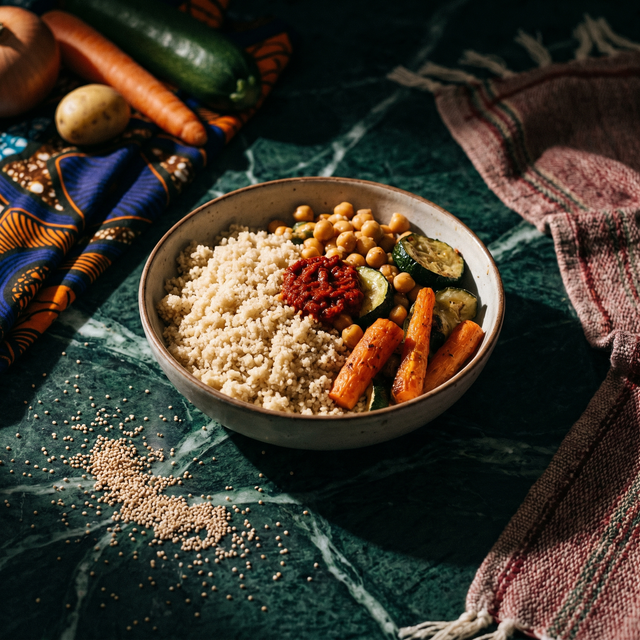
- Key ingredients: lamb, onion, garlic, ginger, cumin, turmeric, carrot, potato, courgette
- A simmered dish, served in its cooking dish, often with bread
Origins and cultural history of tajine
Tajine is originally a Berber dish: a stew of vegetables and meat cooked covered in a clay vessel with a conical lid, a shape that allows cooking without adding water while concentrating the flavours. The steam given off by the food condenses on the lid and falls back onto the dish, which stays moist throughout the cooking. This technique has its roots in the Amazigh culture of the Souss and the mountains of the Anti-Atlas, where nomadic populations needed a way of cooking that used little water and fuel; in Tafraout, potters still shape the red clay dish according to this know-how.
The word tajine comes from the Berber tajin, itself related to the ancient Greek têganon, which designates an earthenware dish. Today it refers to both the utensil and the dish that simmers in it, varying by region with meat, fish or vegetables.
What are the key ingredients of tajine
Making Moroccan tajine relies on meat simmered at length with vegetables and a blend of spices, found in most Maghrebi grocery shops, including NKOSI.
- lamb
- onion and garlic
- ground ginger, cumin and turmeric
- cinnamon
- carrot, potato and courgette
- olive oil
What to know about the tajine
The Moroccan tajine is a stew of lamb and vegetables (carrot, potato, courgette) simmered for a long time with onion, garlic, ginger, cumin, turmeric and cinnamon. It cooks in its own steam in a clay dish with a conical lid, where the steam condenses and falls back onto the food, which stays moist. The word names both the cooking dish and the meal simmering in it, which is served in the dish, often with bread. Without a clay dish, a heavy-bottomed pot with a well-fitting lid gives a similar result.
Frequently asked questions about tajine
Do you need an earthenware dish to make a good tajine?
No: a thick-bottomed pot with a well-fitting lid gives a similar result. The traditional earthenware dish, however, retains steam better and concentrates the flavours more during the covered cooking.
What meat can be used instead of lamb in a tajine?
Beef, chicken or vegetables alone also work for this recipe, with the cooking time adjusted: shorter for chicken, longer for beef in chunks. The principle stays the same, slow covered cooking, with the same spices.
Where can you find the spices for Moroccan tajine in France?
NKOSI sells the cumin, turmeric and cinnamon for this recipe on nkosiagro.com and ships them from the Paris area within 24 to 72 working hours, to mainland France (2 to 3 working days) and to ten European countries. The minimum order is 39 €: in France, delivery to a pickup point is then free, and home delivery is free from 69 €.