






In brief
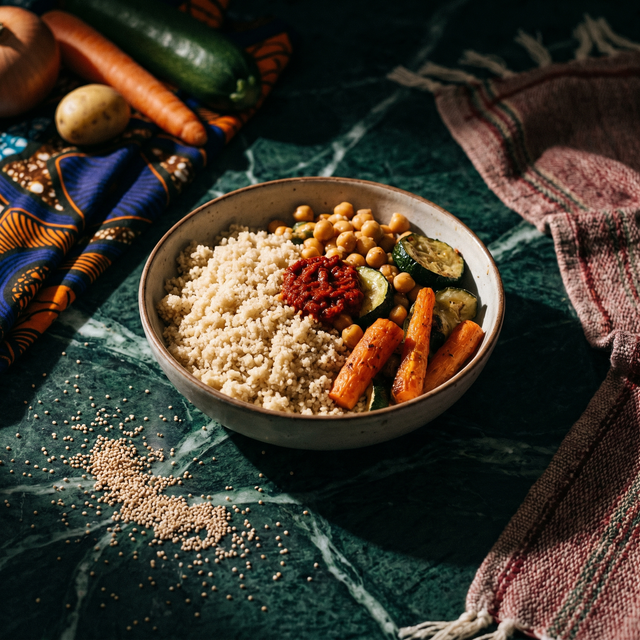
- Senegalese millet porridge: millet semolina (arraw) cooked in water, sweetened and served with curdled milk
- Origin: Senegal, West Africa, known in Wolof as lakh (laax) and fondé
- Essential ingredients: millet arraw, water, sugar, curdled milk or powdered milk, lemon
- Family breakfast, and festive dish for baptisms and the end of Ramadan (korité)
Origins and cultural history of Senegalese millet porridge
In Senegal, this porridge has two Wolof names depending on the preparation and the occasion. Lakh (or laax) is a thick millet porridge, traditionally served with sweetened curdled milk; it is associated with baptisms and korité, the end of the month of Ramadan. Fondé, widely eaten in Dakar, is a finer porridge made from millet flour or semolina rolled by hand, flavored with a dash of lemon or tamarind.
In both cases, the base is arraw, a millet semolina obtained by rolling the flour by hand until small grains form, a technique also found in several Senegalese preparations such as thiakry.
What are the essential ingredients of Senegalese millet porridge
This porridge is made with a few ingredients found in African grocery stores, including NKOSI.
- millet arraw (rolled millet semolina)
- water
- sugar
- curdled milk, plain yogurt or powdered milk
- lemon
- cinnamon (optional)
What to know about Senegalese millet porridge
Senegalese millet porridge is made with arraw, a millet semolina rolled by hand into small grains, cooked in water and sweetened. It goes by two Wolof names: lakh, a thick porridge served with sweetened curdled milk, and fondé, a finer one flavoured with a splash of lemon juice or tamarind. It is eaten at breakfast with the family, and lakh is also a festive dish for baptisms and korité, the end of Ramadan.
Frequently asked questions about Senegalese millet porridge
What is the difference between lakh and fondé?
Both are Senegalese millet porridges. Lakh is traditionally served with sweetened curdled milk, for celebrations such as baptisms or korité. Fondé, more common in everyday life in Dakar, is often flavored with a dash of lemon or tamarind.
Can arraw be replaced with millet flour?
Yes: millet flour (soungouf) gives a finer porridge, while arraw, already rolled into small grains, cooks faster and holds together a little better. Both are found in African grocery stores.
Where to find the ingredients for Senegalese millet porridge in France?
NKOSI sells millet arraw and powdered milk and ships them from the Paris area within 24 to 72 working hours, to mainland France (2 to 3 working days) and to ten European countries. The minimum order is 39 €: in France, delivery to a pickup point is then free, and home delivery is free from 69 €.