

“Sant Yàlla” is a Wolof expression meaning to praise God or to thank God, used in Senegal at moments of shared gratitude. It is not the name of a fixed-date celebration: the gratitude it expresses accompanies several religious and family occasions, always around a meal eaten together. This article explains the meaning of this expression and presents a few Senegalese dishes linked to these meals of gratitude.
What does sant Yàlla mean?
In Wolof, “sant” means to praise or to thank, and “Yàlla” means God: the expression “sant Yàlla” therefore translates as to praise God or to thank God. The Senegalese musician Youssou N'Dour used it as the title of an album in 2003, Sant Yàlla / Egypt, a sign of the place this expression holds in Senegalese culture. It is not, however, the name of a fixed-date celebration, but a formula of gratitude found on several occasions throughout the year.
April 4, Senegal's Independence Day
Senegal's national holiday is celebrated every April 4, in memory of the signing, on April 4, 1960, of the agreement transferring power from France. The country's path to full independence is more complex: Senegal first formed, with French Sudan, the future Mali, the Mali Federation, whose independence was proclaimed on June 20, 1960, before this federation dissolved on August 20 of the same year, the date on which Senegal proclaimed its independence separately. It is nonetheless April 4 that the country keeps as its national holiday.
Meals that express gratitude
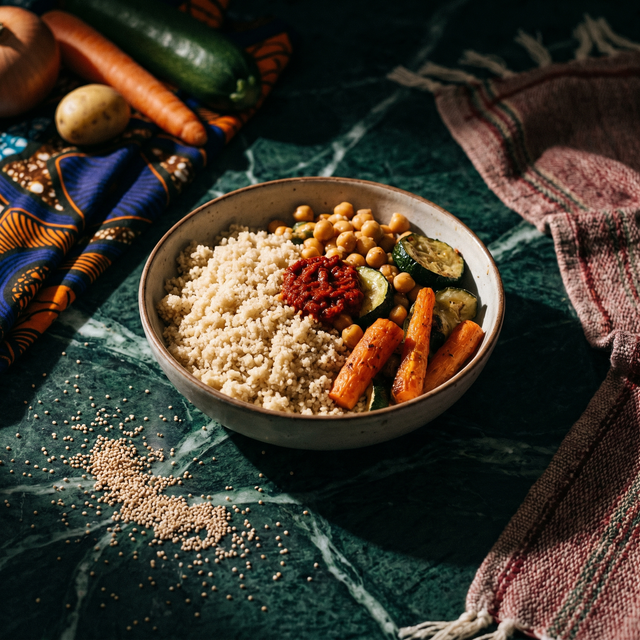
In Senegal, hospitality and sharing come together in one Wolof word, teranga: welcoming a guest means, above all, sharing a meal with them. Major religious and family occasions, births, returns from a trip, family gatherings, are marked by a meal prepared for several people and served from a shared dish.
Three Senegalese dishes for a meal of gratitude
Thiéboudienne
Thiéboudienne, broken rice with stuffed fish and simmered vegetables, is Senegal's national dish, originating from the fishing district of Guet Ndar, in Saint-Louis. Served at midday with family, it is the dish of major occasions. See the thiéboudienne recipe.
Café touba
Café touba, ground with Guinea pepper then brewed like filter coffee, takes its name from Touba, the holy city of Mouridism, the Sufi brotherhood founded by Cheikh Ahmadou Bamba. It is served at Mouride ceremonies and shared daily among family and friends. See the café touba recipe.
Bissap
Bissap, a sweet infusion of dried hibiscus flowers served chilled, accompanies meals and gatherings with family and friends. See the homemade bissap recipe.
The ingredients for cooking these dishes in France
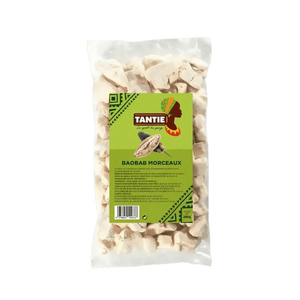
Find ORCHIDÉE broken rice for thiéboudienne, BARKELOU café touba already ground with Guinea pepper, and TANTIE dried bissap flowers, all brought together in our Senegalese cuisine collection.
Frequently asked questions
What does sant Yàlla mean in Wolof?
“Sant Yàlla” means to praise God or to thank God in Wolof. It is an expression of gratitude used on several occasions in Senegal, and not the name of a fixed-date celebration.
What is the date of Senegal's independence?
Senegal's national holiday is April 4, in memory of the agreement transferring power signed with France on April 4, 1960, not August 4.
Where to find Senegalese cuisine ingredients in France?
NKOSI sells several Senegalese cuisine ingredients (broken rice, café touba, dried bissap flowers) and ships them from the Paris area within 24 to 72 working hours, to mainland France (2 to 3 working days) and to ten European countries. The minimum order is 39 €: in France, delivery to a pickup point is then free, and home delivery is free from 69 €.