







Gnangnan is a small bitter eggplant, grown and eaten in West Africa, in particular in Côte d'Ivoire where it defines the taste of kedjenou and many traditional sauces. It is found dried, whole or ground, under the local name of niania or pea-eggplant.
What is gnangnan?
Gnangnan is the fruit of a small wild eggplant of the Solanum genus, the size of a marble, light green to yellow when fresh. Dried, it turns brown and keeps whole or ground into powder. In Côte d'Ivoire, it is also called niania; its precise botanical species varies according to sources, which do not all agree on a single scientific name within the Solanum genus.
How is gnangnan used in cooking?
In ground form, gnangnan is sprinkled directly into a sauce while it cooks, starting with half a teaspoon, its bitterness being concentrated. As whole grains, it is rinsed then cooked in water or in a tomato sauce for about 20 to 30 minutes, until softened, before being crushed to thicken and flavour the dish.
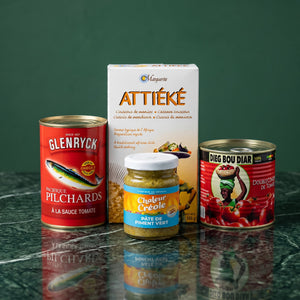
It goes into chicken kedjenou, slow-cooked in its own steam, as well as into clear fish sauces, gouagouassou sauce, a Baoulé speciality, or n'tro sauce, served with rice, attieke, foutou or placali.
Where to find gnangnan in France?
NKOSI offers gnangnan in two forms: ground, ready to sprinkle, and as whole grains, to be cooked then crushed by hand. For the traditional gnangnan sauce, it is often paired with djansang (akpi) grains, and to cook kedjenou from start to finish, the Ivorian kedjenou kit. Find them all in the Ivorian cuisine collection.
Frequently asked questions about gnangnan
Is gnangnan very bitter?
Yes, that is its sought-after characteristic: a distinct, vegetal bitterness that softens a little with cooking. It is added in small amounts, tasting as you go.
Gnangnan as grains or ground, what is the difference?
The dried whole grain must first be rinsed then cooked in water before being crushed. Ground gnangnan, already reduced to powder, is sprinkled directly into the sauce, with no preparation needed.
Which dishes is gnangnan used with?
It flavours chicken kedjenou, clear fish sauces and preparations such as gouagouassou sauce or n'tro sauce, traditionally served with rice, attieke or foutou.