



In brief
- Baobab juice (bouye) is a white, tangy drink made from the dried pulp of the baobab fruit
- Origin: West Africa, notably Senegal, where it is called bouye in Wolof
- Essential ingredients: baobab powder, water, cane sugar, optional condensed milk
- A drink served very cold, with family or friends
Origins and cultural history of baobab juice
Baobab juice, called bouye in Wolof, is made from the dried pulp of the baobab fruit (Adansonia digitata), also nicknamed monkey bread. It is also found in Mali, where it is called zira, and in Burkina Faso. Dried baobab pulp has been authorised as a food ingredient in the European Union since a 2008 decision by the European Commission.
In Senegal, bouye juice is among the most widely consumed drinks, alongside bissap and ginger juice. It is served chilled, in a pitcher or bottle, at meals with family or friends, and the pulp naturally settles at the bottom of the container over time.
What are the essential ingredients of baobab juice
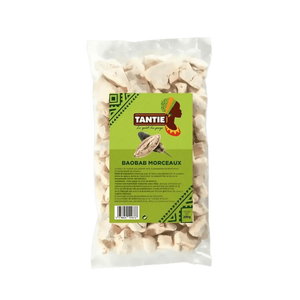
Baobab juice is made with just a few ingredients, starting with the baobab powder found in African and Caribbean grocery stores, including NKOSI.
- baobab powder (dried, ground fruit pulp)
- water
- cane sugar
- unsweetened condensed milk, optional
- orange blossom water, optional
Nutritional benefits of baobab juice
Dried baobab pulp, as authorised in the European Union, is made up mostly of carbohydrates, between 78.3 and 78.9 g per 100 g, of which 16.9 to 25.3 g are sugars and 2 to 3.2 g are protein, according to the 2008 European Commission decision that authorised this ingredient. Unsweetened condensed milk, added as an option, provides around 273 mg of calcium per 100 g, according to the Ciqual composition table from Anses.
Frequently asked questions about baobab juice
What is the difference between baobab juice and bissap?
Baobab juice is made with the dried pulp of the baobab fruit, while bissap is made with dried hibiscus flowers: these are two different drinks, both popular in West Africa, sometimes served at the same meals.
How long does baobab juice keep?
Baobab juice keeps for 3 to 5 days in the refrigerator, in a closed bottle. The pulp settles at the bottom over time: just stir before serving.
Where to find baobab juice ingredients in France?
NKOSI sells the baobab powder, cane sugar and unsweetened condensed milk in this recipe on nkosiagro.com and ships them from the Paris area within 24 to 72 working hours, to mainland France (2 to 3 working days) and to ten European countries. The minimum order is 39 €: in France, delivery to a pickup point is then free, and home delivery is free from 59 €.