

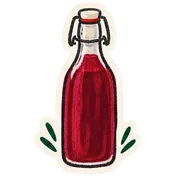










FOSTER CLARKS berries powder juice is an instant drink with a red berry flavour, to dilute in cold water. The 20 g sachet makes 1.5 litres of fresh drink, a classic of African and Caribbean grocery stores.
What is FOSTER CLARKS berries powder juice?
"Berries" here means a blend of berries, red fruits: its ingredient list shows an artificial berry flavouring, with no fruit juice or fruit powder. The FOSTER CLARK'S brand was founded in 1889 in Maidstone, England, by George Foster Clark. It is now made in Malta by Foster Clark Products Ltd, which exports its powder drinks to West Africa and many other countries.
How to use it?
Empty the sachet into a glass or plastic jug, add 1.5 litres of cold water and ice, stir well and serve: no need to add sugar. Do not keep the drink in a metal container; once prepared, keep it in the fridge.
What to pair it with?
NKOSI offers other FOSTER CLARKS flavours in 20 g sachets: lemon juice and mango juice. Find other drinks from the same aisle in the African and tropical exotic drinks collection.
Product information
- Brand: FOSTER CLARKS (Foster Clark Products Ltd, Malta)
- Capacity: 20 g sachet, for 1.5 litres of prepared drink
- Ingredients: sugar, acidity regulator (E330, E331), sweeteners (aspartame E951, acesulfame K E950), artificial berry flavouring, colours (E129, E133), anti-caking agents (E341, E551), stabiliser (E466), vitamin C
- Allergens: none of the 14 allergens that must be declared in the ingredient list
- Average nutritional values per 100 g: energy 1,389 kJ (332 kcal), fat 0 g, carbohydrate 76.8 g of which sugars 68.1 g, fibre 1.7 g, protein 0.7 g, salt 3 g
- Origin: brand founded in 1889 in England, now made in Malta
- Storage: keep the sachet sealed, away from heat and moisture; keep the prepared drink in the fridge
Precautions
This sachet contains aspartame (E951), a source of phenylalanine: to be avoided in case of phenylketonuria, as stated on the packaging. It also contains the colour E129 (allura red), which carries the European regulatory notice that it may have an adverse effect on the activity and attention of children.