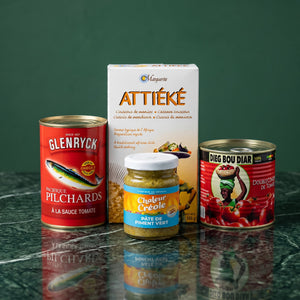











This guide explains how to read the label of a dry or ambient grocery product (spice, flour, tinned food, jarred sauce): the best-before date, the list of allergens, and how to store the product once it has been opened.
Best-before date or use-by date: what the date on the packaging means
There are two kinds of date, depending on the product. The use-by date, “use by”, applies to highly perishable foods that are kept chilled (meat, fish, refrigerated ready meals): once past this date, the product must no longer be eaten. The best-before date, “best before”, applies to dry, sterilised or dehydrated products: spices, flours, rice, tinned food, jarred sauces. Past this date, the product may have lost some of its qualities without posing any risk to health. The best-before date has been used under this name since 13 December 2014, when European Regulation 1169/2011 on food information to consumers came into force, replacing the previous “DLUO” marking. The dry and ambient products sold by NKOSI generally fall under the best-before date.
Reading the ingredient list and spotting allergens
European Regulation 1169/2011 sets out, in its Annex II, a list of fourteen allergens that must be declared: cereals containing gluten (wheat, rye, barley, oats), crustaceans, eggs, fish, peanuts, soya, milk, tree nuts, celery, mustard, sesame seeds, sulphur dioxide and sulphites above 10 mg/kg, lupin, molluscs. When one of them is part of the recipe, it must appear in the ingredient list with typographic emphasis (bold, colour or a different font). The wording “may contain traces of” remains voluntary: it is not systematic even when a risk of cross-contamination exists. The composition of a product can change from batch to batch: it is always better to check the label of the product received rather than a product page, however up to date it may be.
How to properly store a dry product after opening
Once the pouch or jar is open, a dry product loses its qualities faster: light, heat and moisture are the three main causes. The simplest rule, once the product has been opened, is to transfer it into an airtight container (a glass jar with a seal, a food storage box), away from light and heat, in a dry cupboard rather than near a hob.
Where to find this information on NKOSI products
On NKOSI product pages, the composition and allergens are taken from the packaging; in case of doubt or allergy, the label of the product received is authoritative. The guide to African and Caribbean cooking ingredients details, ingredient by ingredient, the origin and culinary use of the products sold by NKOSI, which ships them from the Paris area within 24 to 72 working hours, to mainland France (2 to 3 working days) and to ten European countries. The minimum order is 39 €: in France, delivery to a pickup point is then free, and home delivery is free from 69 €.