



In brief
- Bobolo: fermented cassava paste, wrapped in leaves and steamed.
- Origin: the Beti people (Ewondo), in Cameroon.
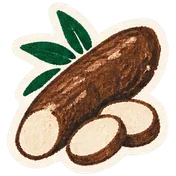
- Essential ingredients: cassava, marantaceae or banana leaves, salt, water.
- A daily accompaniment, served with grilled fish or a spicy sauce.
Origins and cultural history of bobolo
Bobolo is a speciality of the Beti people (Ewondo), in Cameroon. It belongs to the family of cassava sticks found throughout Central Africa under other names: miondo among the Douala, agnizock among the Fang of Gabon, or kwanga, chikwangue, in the Democratic Republic of the Congo and the Republic of the Congo. Cassava itself was introduced to Central Africa in the 16th century by Portuguese navigators, who brought it from South America.
The fermentation of several days that precedes cooking is not just a matter of taste: it removes the compounds naturally present in raw cassava, a step necessary before it can be eaten. Once cooked and wrapped, the stick then keeps for several days, which for a long time made it a practical store of food for the week's meals.
What are the essential ingredients of bobolo
Traditional bobolo requires very few ingredients, but a long preparation time, split between fermentation and cooking.
- fresh cassava
- marantaceae leaves or, failing that, banana leaves
- salt
- water, for soaking
What to know about bobolo
Bobolo is a stick of fermented cassava, wrapped in marantaceae or banana leaves and then steamed. A specialty of the Beti people in Cameroon, it is thicker and firmer than miondo. It is eaten cold or lukewarm, sliced, with grilled fish or a dish in sauce, in place of rice or foufou.
Frequently asked questions about bobolo
What is the difference between bobolo and miondo?
Both are fermented cassava sticks cooked in leaves, but bobolo is a speciality of the Beti people, thicker and firmer, while miondo, thinner and softer, is prepared by the Douala people. The fermentation and steam cooking remain the same.
How is bobolo eaten?
Bobolo is eaten cold or warm, cut into slices, as an accompaniment to a dish in sauce or grilled fish, rather than as a main dish on its own. It replaces rice or foufou in a Cameroonian meal.
Where can I find bobolo ingredients in France?
NKOSI sells ready-to-eat chikwangue, a fermented cassava paste cooked under vacuum, close to bobolo, and ships it from the Paris area within 24 to 72 working hours, to mainland France (2 to 3 working days) and to ten European countries. The minimum order is 39 €: in France, delivery to a pickup point is then free, and home delivery is free from 69 €.