





In brief
- Miondo: a fermented cassava stick, wrapped in a leaf and steamed
- Origin: the Cameroonian coast, a specialty of the sawa people, around Douala
- Essential ingredients: cassava, banana leaves or maranta leaves
- Served with ndolé, grilled fish and grilled meats
Origins and cultural history of miondo
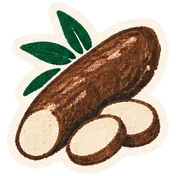
Miondo is a fermented cassava stick, pounded then wrapped in leaves before being steamed. The word comes from Duala, the language of the sawa people who live in the coastal region of Cameroon, around Douala. Among the Beti, a comparable preparation is called ébobolo, better known as bobolo; in Congo, the equivalent is called chicouangue, the chikwangue. Miondo is distinguished by sticks thinner than bobolo, and by a slightly tangy flavor inherited from the fermentation of the cassava.
This fermentation, which lasts several days before pounding and cooking, makes the cassava edible by removing the compounds naturally present in the raw tuber, a step essential to all fermented cassava preparations of Central Africa. Shaping the sticks so they are thin and firm, often done by experienced women, remains a skill passed down within families along the Cameroonian coast.
What are the essential ingredients of miondo
Preparing miondo requires few ingredients, but a long fermentation time and a precise touch for shaping the sticks.
- Fresh cassava
- Banana leaves or maranta leaves
- Water, for soaking and fermentation
- String or plant fiber, to tie the sticks
Nutritional benefits of miondo
Boiled cassava provides, per 100 g, around 112 kcal and 27 g of carbohydrates, with very little protein (around 1 g) and fat, according to the Ciqual table from Anses. Like other Central African cassava sticks, miondo is therefore a food mainly made up of carbohydrates.
Frequently asked questions about miondo
What does miondo taste like?
Miondo has a slightly tangy taste, inherited from the fermentation of the cassava, with a compact, elastic texture. Thinner than bobolo, it is cut into slices and eaten cold or warm, by hand.
What is miondo eaten with?
Miondo traditionally accompanies ndolé, braised fish and grilled meats. It replaces bread or rice as a side to the spicy sauces of the Cameroonian coastal cuisine.
Where to find the ingredients for miondo in France?
NKOSI does not sell fresh cassava to ferment at home, but offers ready-made chikwangue, a fermented cassava paste cooked and vacuum-packed, a preparation similar to miondo, as well as cassava flours, and ships them from the Paris area within 24 to 72 working hours, to mainland France (2 to 3 working days) and to ten European countries. The minimum order is 39 €: in France, delivery to a pickup point is then free, and home delivery is free from 59 €.