

Sauce graine is one of those dishes you don't forget once you've tasted them. Creamy, deep, slightly oily, it has accompanied family meals for generations in Ivory Coast and more widely in West Africa. Its secret lies in a single ingredient: the palm nut, from which an orange pulp with an inimitable taste is extracted.
If you have ever eaten a well-made sauce graine, served with hot attiéké or foutou, you know what we're talking about. For those who want to cook it at home, here is everything to understand about this dish, its history, its step-by-step preparation, and above all the right ingredients to succeed with it.
What is sauce graine?
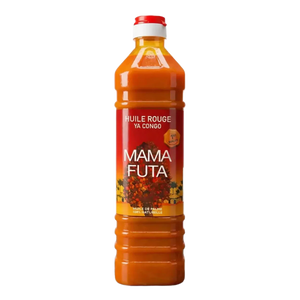
Sauce graine is an Ivorian sauce made from palm-nut pulp. The word "graine" here refers to the fruits of the oil palm, those small reddish nuts clustered in a bunch. Once boiled and pounded, they release a thick, fatty pulp that forms the base of the sauce. It is this pulp, and not the refined palm oil found in bottles, that gives the dish its characteristic orange colour and its round taste.
It is found under different names depending on the West African region. In Cameroon, a related preparation is called nyembwe or moambé sauce. In Gabon and Congo, palm-nut sauce accompanies fish and meats in the same way. But it is in Ivory Coast that sauce graine holds a central place in everyday cooking as in major occasions. It is cooked with beef, smoked fish, crabs or snails, depending on tastes and means.
What distinguishes sauce graine from a simple tomato sauce is its texture. It is dense, almost creamy, and coats the accompaniments instead of running. It is a nourishing dish, designed to satisfy and to bring people together.
Origin and tradition of sauce graine
The oil palm grows naturally throughout the forest zone of West and Central Africa. Local populations have used its fruits for centuries, long before palm oil became a global export product. Sauce graine was born of this ancestral use: getting the best from the palm, from the pulp of the nuts to the red oil.
In Ivory Coast, preparing a sauce graine is often a shared moment. Pounding the boiled nuts takes elbow grease, and this step traditionally brought together the women of the house or the neighbourhood. Even today, in many families, the Sunday sauce graine remains a ritual. It is served at christenings, weddings and celebrations, because it is generous and easily shared among many guests.
For the Ivorian and West African diaspora living in France, this dish is a real bridge to the homeland. Smelling the palm pulp simmering in the kitchen is to rediscover a taste of childhood and family. It is also for this reason that good African grocery addresses are so precious: without real palm-nut pulp, the sauce cannot exist.
Traditional sauce graine recipe
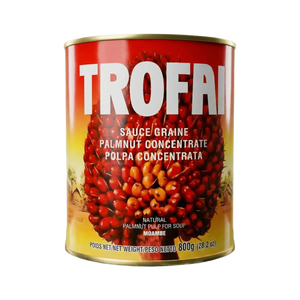
Here is a basic recipe for four to six people. Allow about an hour and a half of preparation and cooking. The simplest method is to use canned palm-nut pulp, already extracted, which saves you the pounding step.
The ingredients:
- 800 g of palm-nut pulp (canned or fresh)
- 600 g of beef, or smoked fish, or both
- 2 onions
- 3 cloves of garlic
- 2 fresh tomatoes or a little tomato paste
- 1 fresh chilli (to your tolerance)
- Smoked or dried fish to flavour
- 1 stock cube, salt and pepper
- Optional: crabs, snails, African aubergines
The steps:
- Cook the beef seasoned with an onion, garlic, salt and a stock cube, until tender. Set aside the meat and its cooking juices.
- If using fresh nuts, boil them then pound them to extract the pulp, which you dilute in hot water before straining. With canned pulp, simply dilute it in a little warm water.
- Pour the palm pulp into a large pot with the meat's cooking juices. Bring to a boil and let it simmer uncovered. A layer of red oil will rise to the surface: this is normal and is the whole point of the dish.
- Add the blended tomatoes, the second sliced onion, the chilli and the smoked fish. Let it reduce gently for thirty to forty minutes, stirring from time to time.
- Stir in the cooked meat and any other ingredient (crabs, snails) at the end of cooking. Adjust the seasoning with salt and chilli.
- The sauce is ready when it has thickened and the orange oil rises to the surface. Serve very hot.
Sauce graine is traditionally enjoyed with attiéké, plantain or yam foutou, or quite simply with white rice. To better understand these cassava and plantain accompaniments, see our complete guide to attiéké and foutou.
The ingredients to succeed with your sauce graine
Everything rests on the quality of the palm-nut pulp. It is the ingredient you won't find in a regular supermarket, and that is precisely where an online African grocery changes everything. At NKOSI, we select the palm-nut pulp and the products that make the difference in a real sauce graine, with delivery throughout France and Europe.
- Palm-nut pulp: the absolute base, best in quality canned form for a faithful result.
- Smoked and dried fish: it brings the depth of flavour typical of West African sauces.
- Spices and stock cubes: onion, garlic, chilli and a good stock build the seasoning.
- Attiéké and foutou: the essential accompaniments for a complete meal.
You will find all these products in our selection dedicated to Ivorian cuisine, as well as in our wider section devoted to West African cuisine. Enough to recreate at home, in Paris as elsewhere, the authentic taste of a family sauce graine.
Frequently asked questions
What is the difference between sauce graine and palm oil?
Palm oil is extracted and refined from the nuts, while sauce graine uses the whole pulp of the boiled and pounded nuts. The sauce keeps all the substance of the fruit, its thick texture and round taste, whereas the oil keeps only the fat.
Can you prepare sauce graine in advance?
Yes, and it is often even better reheated. You can cook it the day before and keep it in the fridge for two to three days. The flavours concentrate over time. It also freezes very well.
What do you serve sauce graine with?
The great classics are attiéké, plantain or yam foutou, and white rice. Placali and tô are also enjoyed in some regions. The idea is to have a neutral starch that showcases the richness of the sauce.
Where to find palm-nut pulp in France?
Palm-nut pulp is rarely found in supermarkets. The simplest is to order from an online African grocery like NKOSI, which delivers the pulp, smoked fish and all the sauce graine ingredients throughout France and Europe.